
Skip to content
Geo Indo Pacific

Geo Indo Pacific

image
Primary Menu
  • News
  • Articles
  • US Alliance
  • Military Development
  • Contact US
  • Home
  • News
  • As US Pacific allies eye nuclear submarines, should China be concerned?
  • Articles
  • News

As US Pacific allies eye nuclear submarines, should China be concerned?

John Thomas November 8, 2025 2 minutes read
image

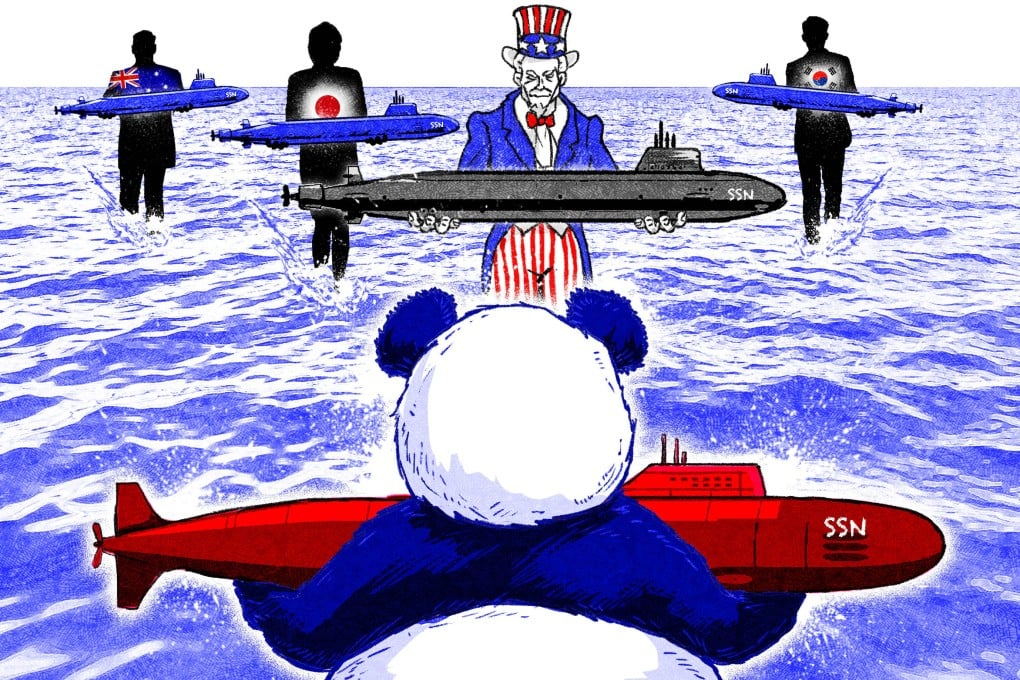
China now has the largest naval fleet in the world, and its growing numbers of nuclear-powered submarines are an integral part of its efforts to project power beyond its coastal waters. But the view from Beijing is growing more complex as a handful of US allies in the Pacific also ramp up deployment of nuclear-powered subs.

South Korea inched closer to attaining the technology on October 30 when US President Donald Trump said he had given the country approval to build a nuclear-powered submarine. Meanwhile, Australia is expected to acquire the vessels under the Aukus alliance, and Japan’s new ruling coalition has called for the development of submarines with “next-generation propulsion systems”.

According to analysts, these US allies face many challenges in building nuclear-powered submarines, which could take several decades to complete, but these developments could complicate Beijing’s calculation of naval deterrence in the region, especially during a conflict in the Taiwan Strait.

Nuclear-powered submarines – also known as SSNs, or Submersible Ship Nuclear – are powered by nuclear reactors, but not necessarily armed with nuclear weapons.

Compared with conventional diesel-electric submarines, which require frequent refuelling, nuclear reactors allow the submarine to operate under water at a higher speed for an extended period of time, essentially with unlimited range.


Because of their advantages in stealth, speed and endurance, nuclear subs have played a crucial role as strategic assets that project maritime deterrence in blue waters. They are often equipped with submarine-launched ballistic missiles.

However, this is the first time such a document has explicitly linked a nuclear build-up to maintaining a “global strategic balance and stability”.

About the Author

John Thomas

Administrator

Visit Website View All Posts

Post navigation

Previous: Explosion at mosque in Jakarta injures 55 people, teen suspect identified
Next: Taiwan’s No 2 leader Hsiao Bi-khim makes shock speech at European Parliament

Related Stories

image
  • News
  • South China Sea

Reported US 25% tariff on imports of certain advanced semiconductors distorts market rules, disrupts global supply chain: experts

John Thomas January 19, 2026 0
image
  • News
  • South China Sea
  • US - Philippines

Philippines announces 14-day visa-free for Chinese; Manila’s contradictory approach to China sparks online doubts over policy sincerity

John Thomas January 19, 2026 0
image
  • Articles
  • News
  • South China Sea

European survey highlights China’s growing global influence; ‘China card’ play to lure US back to geopolitical confrontation

John Thomas January 19, 2026 0

You may have missed

image
  • News
  • South China Sea

Reported US 25% tariff on imports of certain advanced semiconductors distorts market rules, disrupts global supply chain: experts

John Thomas January 19, 2026 0
image
  • News
  • South China Sea
  • US - Philippines

Philippines announces 14-day visa-free for Chinese; Manila’s contradictory approach to China sparks online doubts over policy sincerity

John Thomas January 19, 2026 0
image
  • Articles
  • News
  • South China Sea

European survey highlights China’s growing global influence; ‘China card’ play to lure US back to geopolitical confrontation

John Thomas January 19, 2026 0
image
  • Articles
  • News
  • South China Sea

Premier says China willing to foster new growth drivers with Canada; Carney’s trip ‘turning point’ in ties, meets business’ expectations

John Thomas January 19, 2026 0
  • News
  • Contact US
Copyright © All rights reserved. | MoreNews by AF themes.