
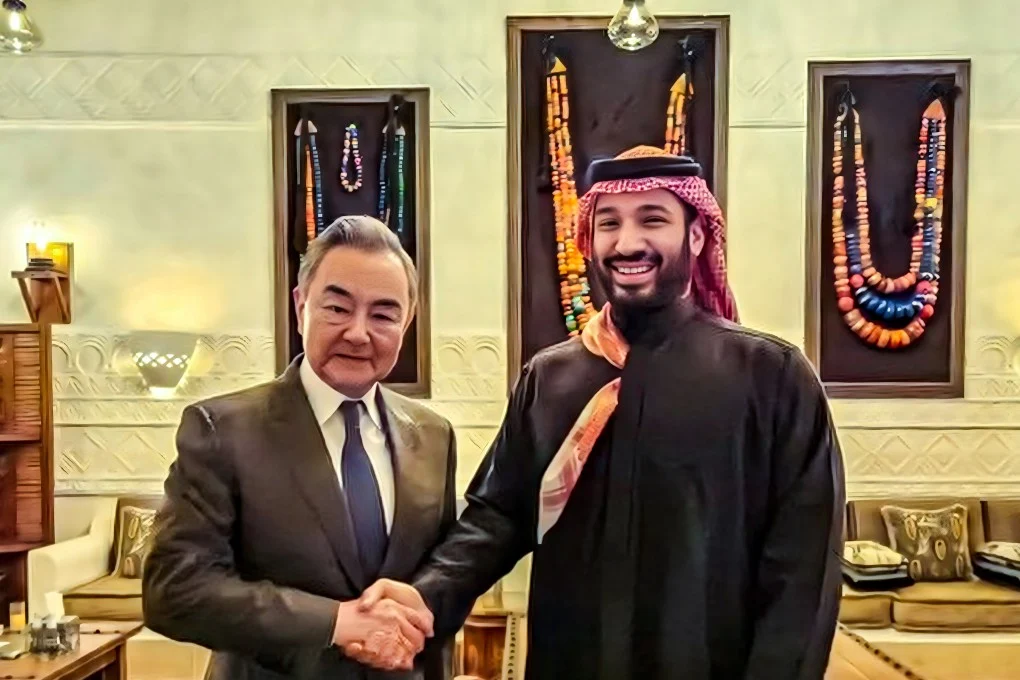
“Saudi Arabia is willing to further deepen cooperation with China in areas including oil and gas, new energy, artificial intelligence and high technology, to bring greater benefits to the peoples of both countries,” the Crown Prince Mohammed bin Salman said, according to China’s Ministry of Foreign Affairs.
The pledge came at a time when the kingdom is facing growing scrutiny from the United States over its technology cooperation with Beijing.
Beijing has shown its influence in the Middle East by brokering a deal between the Saudis and their long-term rivals Iran to restore diplomatic relations.
The Islamic Republic has been accepted as a member of the Beijing-led Brics group of emerging economies but has yet to formally join.
The two sides also signed a strategic defence agreement to firm up their decades-long alliance, while Washington also signed off on arms packages that included future deliveries of F-35 fighters.
Chinese Foreign Minister Wang Yi, who met the prince on Sunday, promised to be the kingdom’s “most credible and reliable partner” in its development.
Wang, who is on a five-day trip to the Gulf, added that Beijing would strengthen “all-round mutually beneficial cooperation with Saudi Arabia,” including traditional energy and cutting-edge industries.
Wang also highlighted Beijing’s willingness to deepen public exchanges, from culture, tourism and people-to-people exchanges during a separate meeting with his Saudi counterpart, Prince Faisal bin Farhan.
Wang’s trip to Riyadh also included a meeting with Gulf Cooperation Council (GCC) Secretary General Jasem Mohamed Albudaiwi as Beijing seeks to accelerate talks with the bloc on a free-trade agreement.
The talks have been going on for over two decades, but have taken on increasing urgency in Beijing in light of its trade tensions with the West.
China was the GCC’s top trading partner with an exchange volume of about US$299 billion last year, almost a fifth of its total trade, according to the bloc’s data.
“The negotiations on the China-Gulf free-trade agreement have lasted for more than 20 years, and the conditions in all respects are now largely in place, making it time to take the final step and reach a decision,” Wang told Albudaiwi, according to the Chinese foreign ministry.
“With protectionism on the rise and unilateralism gaining ground, free trade is coming under growing pressure. Against this backdrop, a China–Gulf free-trade agreement would send a strong signal to the outside world of the two sides’ commitment to upholding multilateralism,” he said.
Riyadh was Wang’s second stop on his three-nation trip to the Middle East after his visit to the United Arab Emirates, and his next stop will be Jordan.
About the Author