
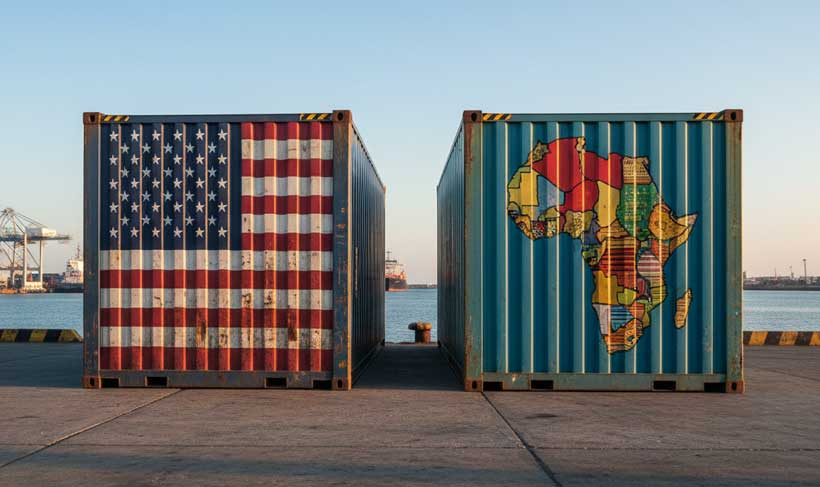
U.S. President Donald Trump’s decision to recall multiple ambassadors has sharply reduced Washington’s diplomatic footprint across sub-Saharan Africa, leaving the United States without top-level representation in more than half of the region’s countries. The move risks complicating U.S. efforts to advance trade-focused diplomacy and manage security crises across a continent marked by coups, insurgencies and geopolitical competition.
Shift from Aid to Deal-Making
Since returning to office, Trump has pushed a business-first approach to Africa, prioritising trade, rare-earth deals and bilateral agreements over traditional foreign aid. The administration has also sought to portray the United States as a stronger partner than China, which has expanded its economic influence across the continent through infrastructure and mining investments.
Trump has personally engaged in high-profile diplomacy, including brokering peace talks between the Democratic Republic of Congo and Rwanda and intervening in disputes involving Nigeria and South Africa. Officials say this hands-on style reflects the president’s belief that personal leadership can substitute for traditional diplomatic channels.
Embassies Already Under Pressure
U.S. embassies in Africa have long suffered from staffing shortages, a problem spanning multiple administrations. Trump’s recall of 13 chiefs of mission bringing total ambassadorial vacancies to roughly 30—has deepened those gaps, former diplomats and experts say.
The State Department has not clarified when or whether replacements will be nominated, raising concerns that embassies will struggle to conduct sustained engagement, crisis response and policy follow-through without confirmed ambassadors.
Personal Diplomacy vs Institutional Presence
Former officials argue Trump’s approach reflects his preference for direct engagement over institutional diplomacy. Cameron Hudson, a former U.S. Africa official, said the president appears to believe that countries merit attention only when he is personally involved undermining the role of ambassadors in shaping long-term relationships and local influence.
Beyond Trump himself, Massad Boulos, a senior adviser and Trump’s son-in-law by marriage, has played a central role in Africa diplomacy, including mediation efforts in Congo, Rwanda and Sudan. But experts note that such engagement still requires embassies to handle implementation and follow-up.
Security Setbacks and Diplomatic Risks
Despite U.S. engagement, Washington’s influence in Africa declined during the Biden administration, with the loss of a military base in the Sahel and limited success countering China’s dominance in strategic minerals. Trump’s renewed focus on Africa has also faced setbacks, including renewed fighting in eastern Congo shortly after peace commitments were reaffirmed.
The recall of ambassadors from countries such as Rwanda, Nigeria and Niger where security challenges remain acute raises questions about Washington’s ability to respond quickly to crises or sustain pressure on regional actors.
Leadership Vacuum in Washington
Compounding the issue overseas, the State Department’s Africa Bureau is also facing leadership turnover. Jonathan Pratt, the senior bureau official, is retiring, with Deputy Assistant Secretary Nick Checker set to assume the role. Trump has yet to nominate a Senate-confirmed Assistant Secretary of State for African Affairs, a delay former officials warn could weaken policy coordination.
Personal Analysis
Trump’s ambassador recalls appear rooted in a belief that transactional diplomacy and presidential deal-making can replace traditional diplomatic infrastructure. While personal engagement can deliver short-term wins, Africa’s complexity spanning security crises, political transitions and great-power competition demands sustained, on-the-ground diplomacy.
Without ambassadors and confirmed leadership in Washington, U.S. policy risks becoming reactive and personality-driven rather than strategic. At a time when China and Russia are deepening their presence across Africa, the absence of senior U.S. envoys could quietly erode Washington’s influence regardless of how ambitious its deals or declarations may be.
About the Author