
China’s military aerospace sector is clearly in a period of rapid growth and innovation right now. As it continues to roll out new combat aircraft designs, crewed and uncrewed, for domestic use, it’s also lining up new exports of at least three of its in-production fighters. That’s one finding from the unclassified version of an annual Pentagon report to Congress on China’s military, released yesterday.
The latest Pentagon assessment of the military and security developments involving China doesn’t include much in the way of new information on the individual aircraft programs for the People’s Liberation Army (PLA).
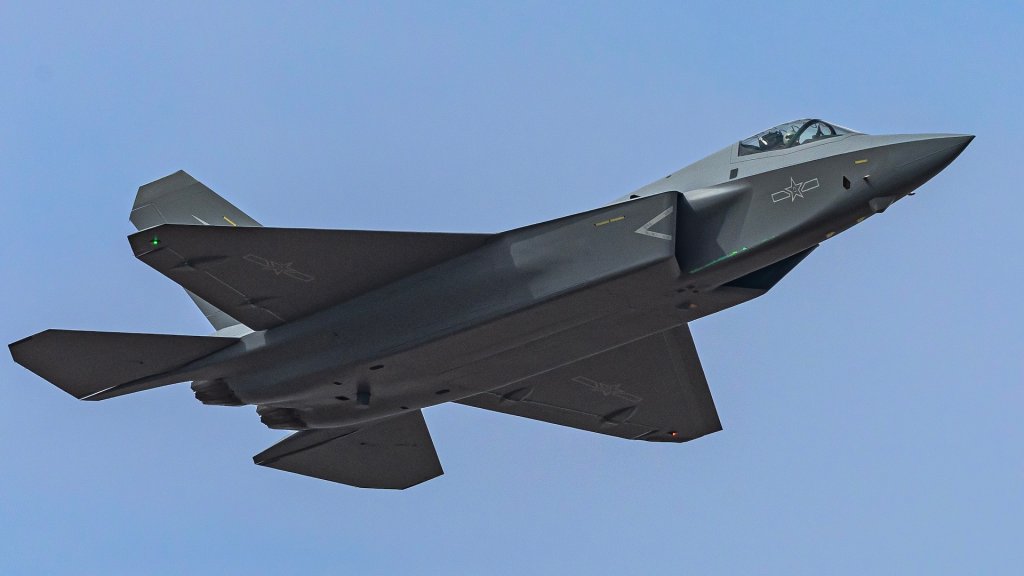
The report does mention the debut in the last 12 months of “two stealth aircraft with novel tailless design features,” the aircraft that are now known informally as the J-36 and the J-XDS. Other debuts highlighted include the land-based J-35A fifth-generation combat aircraft and the J-15D carrier-borne electronic warfare aircraft. Also of note is the statement that the new airborne early warning and control aircraft based on the Y-20B transport is “meant to identify and track advanced stealth aircraft.”
Perhaps the most significant military aerospace development is the assertion in the report that China aims to produce six aircraft carriers by 2035, which would provide a total of nine (China’s third, the Fujian, began its inaugural sea trials in May). Recent imagery indicates that China is progressing with work on a new aircraft carrier, its fourth, which is expected to introduce nuclear propulsion. There are increasing reports that Beijing may also still be working on at least one more conventionally powered carrier, too. If these plans are accurate, then the gap between China’s fleet of carriers and the U.S. Navy’s 11 active nuclear-powered supercarriers is growing smaller at an even faster pace.
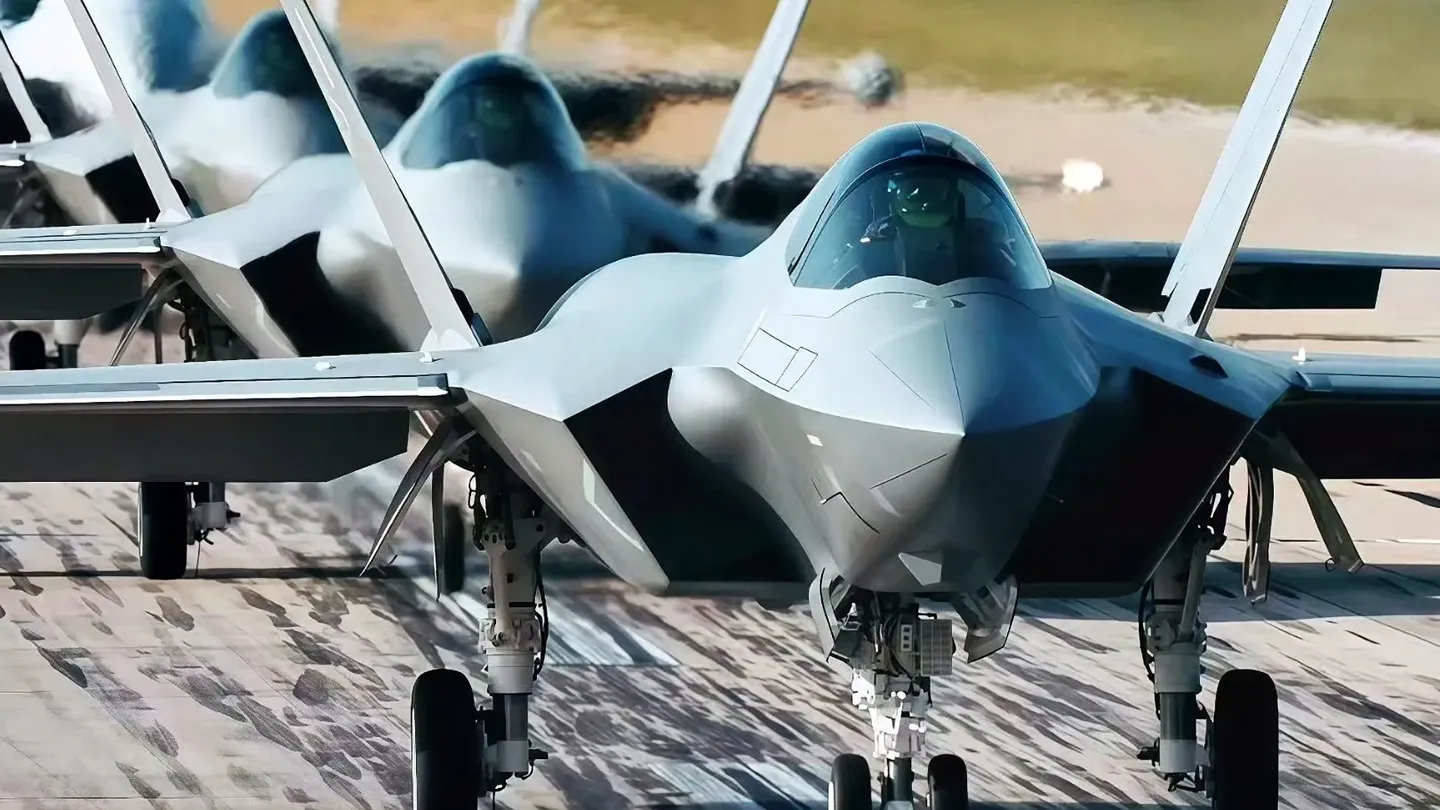
When it comes to China’s fighters for export, the report identifies the fifth-generation Shenyang FC-31 (export variant of the J-35), the fourth-generation Chengdu J-10C, and the JF-17, which it defines, somewhat puzzlingly, as a light combat aircraft. The last of these, also named Thunder, is a China-Pakistan coproduction, not used by the PLA.
In terms of orders already achieved, the Pentagon states that, as of May 2025, the FC-31 has no sales. However, it does say that there are “interested clients,” which include Egypt, Saudi Arabia, and the United Arab Emirates (UAE).
The first prototype FC-31 took to the air in 2012 and was followed, in 2016, by a significantly reworked and greatly refined version, which we discussed in detail at the time. More recently, developmental focus has been on the J-35 version for carrier-based service with the PLA Navy. Alongside this, Shenyang has also developed the J-35A, a land-based stealth fighter that has been under development for some time and which publicly emerged late last year.
About the Author