
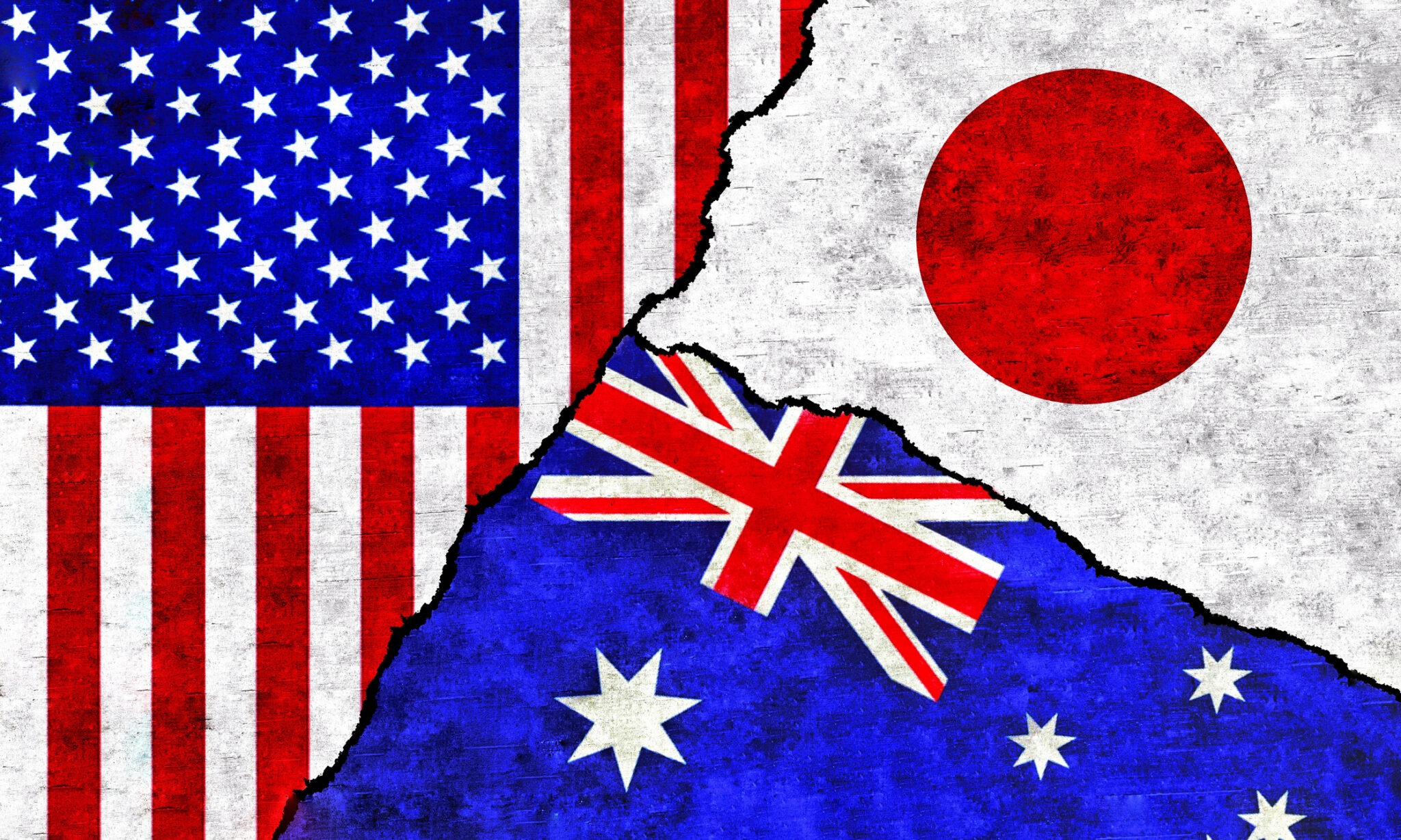
The US intervention in Venezuela and its withdrawal from dozens of multilateral bodies are reminders that President Donald Trump will exercise power as he sees fit, with scant regard for international law or norms. Even so, hardnosed national interests of the kind that Trump understands continue to underpin the value of the Australia-United States alliance for both parties.
The trick is ensuring that Trump and his team recognise this. Australia could make its case to Trump more effectively by first consulting with Japanese Prime Minister Sanae Takaichi about the concept of strategic indispensability, which permeates the economic security agenda she is driving.
Whatever Trump’s faults, there remains no substitute for US power. While Australia needs to strengthen its military and develop national resilience, achieving self-reliance is unrealistic. As Defence Minister Richard Marles has said, the real threat is not invasion; it is the potential for a hostile power, most likely China, to coerce Australia by targeting its economic connections to the region and the world. Securing economic lifelines, such as critical sea lanes, requires dependable and capable allies. Whatever plausible constellation of regional partners Australia could assemble, it probably would not deter Beijing’s coercion unless the US were involved. And the risks of failure are stark: acquiescence to a Sinocentric regional order would challenge the freedoms and way of life Australians hold dear. Japan faces the same dilemma, only more acutely due to its proximity to China.
The best way to ensure US reliability is persuading Washington that the alliance is in its national interest. Trump is demonstrably willing to act unilaterally in the face of international criticism, even to the extent of threatening allies such as Canada and Denmark. But the Trump administration seems to recognise that it needs Australian help to win the competition with China in the Indo-Pacific, which is a high priority in the 2025 US National Security Strategy (NSS). That calculation is based more on Australia’s location and resources than shared values or the mateship forged in past conflicts. There is historical precedent for this cynical view of Australia’s worth, just as some of Trump’s recent actions may have raised fewer eyebrows during the Cold War.
Many of the benefits that the US military and intelligence agencies derive from the alliance with Australia are well known and frequently cited. These include access to facilities such as Pine Gap and North West Cape and the rotational deployment of marines, bombers and submarines through Australian bases. In a crisis or conflict, the US force presence in Australia could swell substantially, exploiting the strategic depth offered by locations further from China’s missile arsenal. The value of Australia’s strategic real estate could increase if Canberra’s 2026 National Defence Strategy (NDS), expected around April, announces further steps towards joint planning and operations.
Tokyo is also used to communicating its strategic worth to Washington in geographic terms, as prime minister Yasuhiro Nakasone did in 1983 when he compared Japan to an ‘unsinkable aircraft carrier’. Like Australia, Japan’s military modernisation includes measures to broaden access to US forces and investments in long-range strike and other deterrence capabilities. This aligns with Washington’s expectations for its allies in its NSS. The Trump administration also wants Australia, Japan and other Indo-Pacific allies to spend more on defence. Takaichi has brought forward planned increases in defence spending, which should nominally surpass 2 percent of GDP this year, but more will be needed. Similarly, Washington will judge the credibility of Canberra’s NDS by the quantum and speed of additional defence spending.
As important as these military commitments are, they are not enough to prove the worth of an alliance to Trump. According to the NSS, the ultimate stakes are in the economic contest with China, including in critical technologies and resources. Here, the prognosis is dire. ASPI’s updated Critical Technology Tracker reveals that China leads research performance in 66 of the 74 technologies tracked. Despite the announcement of some worthy initiatives, things have not changed markedly since Australia’s Minister for Resources Madeleine King told ASPI’s Darwin Dialogue in 2023 that ‘China enjoys an unchallenged position across many aspects of the global critical minerals market’.
The review that Takaichi has launched into Japan’s economic security settings will need to simultaneously tackle Beijing’s economic coercion and signal commitment to Trump’s economic agenda. To achieve this, the review may develop the concept of strategic indispensability, which was proposed in a 2020 policy paper by the Japan’s governing Liberal Democratic Party. Under this plan, Japan would pursue self-reliance (called strategic autonomy in the paper) in some sectors, while also seeking to become indispensable to key trading partners in a few critical technologies.
Economic indispensability of this kind could reinforce deterrence in three ways. Being indispensable to Beijing would raise the cost of its coercion, as Keio University professor Michito Tsuruoka told The Sydney Dialogue, hosted by ASPI in December. Being indispensable to Washington could make US intervention to defend its ally—and, by extension, US economic interests—more credible. Being indispensable to global supply chains should help internationalise responses to coercion by engaging third countries’ economic interests.
Japan’s 2022 Economic Security Promotion Act has broad provisions for specifying products as critical domestically. But narrower criteria should be used to identify sectors that are strategically indispensable to the US, China or the world. Those that dovetail with Trump’s NSS could include nuclear energy, AI, quantum computing and semiconductors. Closer coordination with the US and other partners in these sectors would help Japan manage supply chain risk without necessarily excluding China. Ideally, Trump would view Chinese economic coercion of Japan—including the present bout, which is retaliation for Takaichi’s stance on Taiwan—as a direct threat to US interests, necessitating a collective response.
Australia’s best candidate for indispensability is the critical minerals sector. Beijing is trying to mitigate its dependence on Australian commodities, such as iron ore, but it could find it harder to source alternatives to Australian critical minerals. Those include some, such as zirconium, that China needs for military purposes. Given Trump’s fixation on critical minerals, it was no surprise that his meeting with Prime Minister Anthony Albanese in October yielded a mining and processing deal alongside assurances about AUKUS. The Trump administration’s Pax Silica initiative takes a whole-of-supply-chain view that should allow Japan and Australia, as founding members, to highlight their respective strengths.
Tokyo and Canberra could work together to raise their collective indispensability to Washington. Progress in the Australia–Japan defence relationship should be matched by efforts to secure vital sea lanes, alleviating some of the burden on the US. Similarly, Japanese capital and engineering heft could help build downstream processing and manufacturing in Australia in key sectors. This could include lithium battery supply chains, as discussed at the inaugural Japan-Australia Economic Security and Industrial Cooperation (JAESIC) Symposium, hosted by ASPI in Canberra in November. The broad involvement of US-based companies in JAESIC showcased how such initiatives could complement Trump’s economic vision.
If Takaichi consolidates her position by winning a snap general election in February—and it’s likely she will—she is expected to use that mandate to galvanise her vision for economic security, including pushing forward with strategic indispensability. She is tipped to follow up a visit to Washington around March with a visit to Australia this year, as part of commemorations for the 50th anniversary of the 1976 Australia–Japan Basic Treaty of Friendship and Cooperation in June. So, the coming months are the perfect time for Canberra to put strategic indispensability on the bilateral agenda.
In a power-based world, the strongest alliances are indispensable. Trump needn’t be like-minded to see the value in that.
About the Author