
In approving construction of an enormous Chinese embassy in London, Britain is trading long-term security resilience for short-term economic advantage.
For Australia, the 20 January decision should raise concerns about strategic signalling, alliance coherence and the risks of greater economic dependence on China—at a time when all AUKUS partners are attempting to strengthen the pact against that country, the United States’ peer competitor.
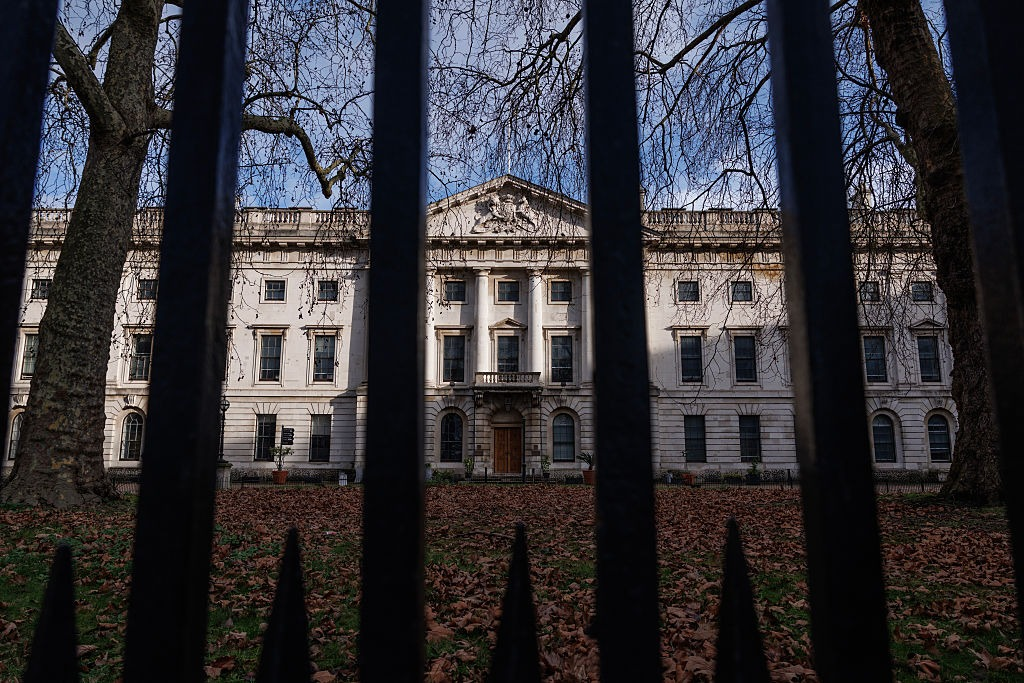
The 55,000 square metre embassy will be the largest diplomatic mission in Europe, bigger than even the US embassy in London. It will be beside the Tower of London and within metres of sensitive communications cables linking financial data from the city to Canary Wharf.
The planned embassy has been criticised as a hub for interference in Britain and a base for controlling China’s critics in the country.
It is difficult to not view Britain’s decision as a desperate attempt to revive its stagnant economy. By coincidence, the embassy announcement came on the day when the Office for National Statistics reported that 121,166 payrolled jobs had been lost since last September, the sharpest fall since the pandemic. Meanwhile, public debt stands at around 100 percent of GDP.
Against this backdrop, Beijing increasingly appears not as a strategic partner of choice but as a much-needed economic lifeline for Britain. This is confirmed by reports that Downing Street believes the embassy approval will pave the way for a new trade deal ahead of Prime Minister Sir Keir Starmer’s visit to China this month.
Yet the security concerns surrounding the site are substantial. Redacted plans show a network of 208 secret rooms beneath the building where a single concealed chamber will sit directly alongside critical fibre-optic cables containing sensitive financial data. Drawings of the secret rooms show air-extraction systems and venting, suggesting they will house extensive computer infrastructure.
As for the construction period, there are concerns about possible tapping: Chinese officials will be just 1 metre from cables running beneath the pavement. An inspectors’ report acknowledged that, under diplomatic convention, China could legally refuse to let British authorities inspect the building during construction or after completion.
Concerns over espionage activity are not unfounded, especially as Westminster last year was engulfed by a Chinese spying scandal. It exposed the vulnerability of democratic institutions themselves. Subsequently, the charges against the two men accused of spying were dropped, because the British government refused to label China a ‘threat’. This, too, reinforced perceptions of excessive caution towards Beijing.
As for the embassy, the US has reportedly expressed deep unease about the plans, while the chair of the US House Select Committee on the Chinese Communist Party has openly opposed the development, warning that US data transiting nearby cables could be placed at risk. When allies raise red flags at this level, those concerns warrant close attention.
For Australia, the lessons is that economic diversification, particularly away from China, should always be a strategic necessity. Dependence on a strategic competitor gives it leverage.
Governments perceived as transactional on national security can lose allied confidence. Britain is not only a Five Eyes intelligence partner but a member of AUKUS, a security partnership designed to balance China through deterrence. When an AUKUS partner appears to accommodate Beijing for a favourable economic outcome, questions about its strategic coherence inevitably follow.
This is not an argument against trade with China. In an interconnected global economy, engagement is unavoidable. But dependence born of apparent domestic policy desperation is different. If a government must turn to China out of necessity, it constrains its own strategic autonomy.
Britain’s embassy decision is therefore more than a planning approval. It is a warning about how economic weakness can translate into strategic vulnerability—and one Australia should heed carefully.
About the Author