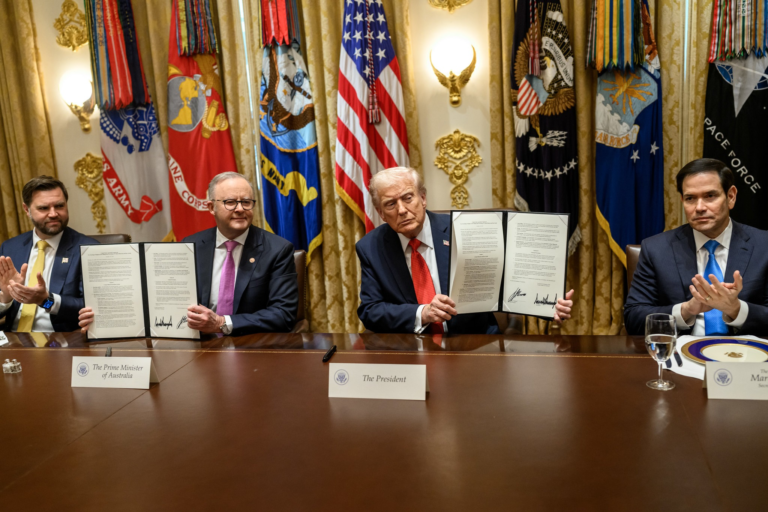

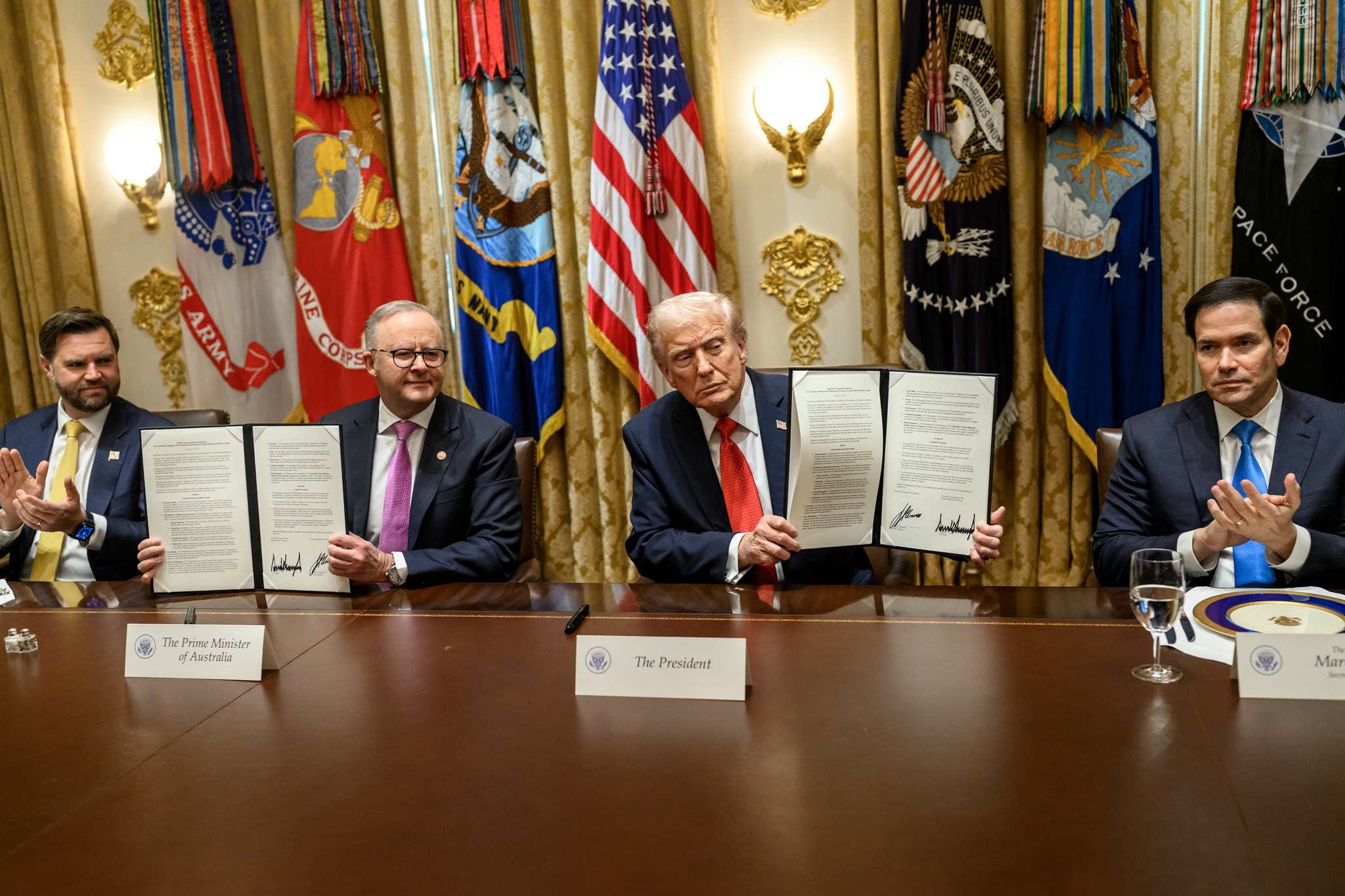
Governments need to move beyond faith in market self-correction and legacy institutions and instead build disciplined arrangements in small groups of countries to align public policy with private capital. US Secretary of State Marco Rubio’s Critical Minerals Ministerial meeting on 4 February will be an important step in this approach.
While it is uncertain which nations other than Australia and India have been invited, Rubio’s calling together of counterparts for the inaugural meeting in Washington is a clear signal that critical minerals have moved from a sectoral concern to a macro-strategic problem. It can be assumed that Rubio will leverage the Pax Silica group, established in December. The United States-led initiative focuses on critical minerals and technologies and includes countries such as Australia and Japan. Canada, Taiwan and the European Union are currently observers, and India is expected to join.
Rare earth elements and other critical minerals—essential to defence systems, clean energy, advanced manufacturing and digital infrastructure—are now embedded in markets where normal price discovery and risk allocation no longer function.
Countries that do not want to be dependent on and vulnerable to China’s ability to withhold the export of critical minerals as a coercive tool, including Australia, should aim to ensure that the ministerial is the starting point and not a one off.
ASPI’s longstanding work on critical minerals, including through the 2023 and 2024 Darwin Dialogues, demonstrates that the current challenge isn’t cyclical volatility but structural market failure. While rare earths are mined in several countries, value is captured overwhelmingly downstream. China controls roughly 70 percent of global rare earths production but, more critically, it controls close to 90 percent of worldwide processing and refining capacity, including separation and magnet production.
That degree of concentration is incompatible with market competition. It has resulted in uncompetitive and unfair practices to put political pressure on not only smaller powers but, increasingly, the US and major European countries. It reflects Beijing’s sustained industrial policy, non-transparent state support and a willingness to absorb losses to secure long-term strategic advantage. We have watched the free market be bought, stolen and subsidised in a deliberate strategy to reduce China’s dependence on the world while increasing the world’s dependence on China.
It is now clear that geography and geopolitics are finally outweighing geology in determining economic security outcomes. Concentrated processing capacity exposes importing states to coercion, supply disruption and strategic leverage.
The limits of traditional multilateral responses have been exposed. Institutions such as the World Trade Organization weren’t designed to manage strategic competition in sectors where commercial behaviour is inseparable from state power. Topics such as intellectual property theft, diplomatic coercion and monopolies are seemingly beyond scope or, sadly, even reform. WTO processes are slow, retrospective and poorly equipped to address non-transparent subsidies, informal export controls and state-directed pricing.
Even where cases have been won—as with Japan’s vital win in 2014 relating to China’s blocking of rare earths—the WTO findings process takes years and, after a temporary reprieve, Beijing merely returns to global coercive and unfair trade practices. Most coerced countries choose short-term compromise rather than facing the time, money and effort it takes to achieve an international ruling. Australia and the EU have both started and then stopped WTO cases against China. Australia ended two cases (wine and barley) in 2023, one of which had been with the WTO for more than three years. This means that, for critical areas such as minerals, a national policy that relies on WTO remedies isn’t risk management; it’s strategic complacency.
Unilateral responses—such as public statements and investments in domestic rare earth capacity—by nations facing such coercion are necessary but insufficient. No single country can replicate an entire critical-minerals production chain (mining, processing, manufacturing and recycling) at scale without accepting high fiscal costs, creating inefficiencies and introducing new vulnerabilities. Subsidies alone cannot create resilience. Supply chains are ultimately built by firms responding to credible demand signals and manageable risk profiles, not by policy declarations.
This is why minilateralism is the most credible response—for the economy, security and sovereignty. Smaller coalitions of trusted partners can align policy, capital and industry in ways that global frameworks can’t, at least presently.
In the field of critical minerals, Australia and Canada are logical anchors. Both offer large, geologically diverse resource bases; stable regulatory systems; and deep technical capability that should be viewed as complementary, not competitive. When paired with the industrial scale, capital markets and technological depth of the US, Japan and South Korea, these countries form a nucleus capable of supporting resilient, diversified value chains without excessive fiscal leakage. It is then feasible to have these regional powers formally join with European powers to create a truly global partnership that prioritises trusted and reliable supply chains, not just cheap ones.
Such resilience has a price, but sovereignty is about fighting for freedom, not expecting it for free. Diversifying supply chains will raise costs in the short to medium term. Policymakers must acknowledge this explicitly. Pretending otherwise leads to underinvestment, policy churn and misallocated subsidies. The policy task is not to eliminate costs, but to decide which costs are acceptable to reduce systemic risk.
Crucially, governments cannot resolve this problem without structured, ongoing engagement with the private sector. Mining companies, processors, financiers and manufacturers understand project timelines, capital intensity, permit-provision risk and market volatility far better than most policymakers. Without that insight, public policy will continue to misprice risk.
Security imperatives also don’t justify abandoning environmental, social and governance standards, including those around modern slavery. Failures in these areas are material supply-chain risks. Projects that lack social licence face delays, litigation and capital withdrawal—outcomes that directly undermine resilience objectives.
This is why the Critical Minerals Ministerial should be backed. If it succeeds, it will accelerate a shift from fragmented national responses towards disciplined minilateral cooperation grounded in commercial reality. Ongoing failure will mean that critical-mineral markets will remain distorted, capital will remain cautious and strategic vulnerability will deepen.
The ministerial would also demonstrate that democracies such as Australia can manage different threats simultaneously. Those worried about what a changed US means for allies can argue against President Donald Trump’s tariffs and position on Greenland while still working with the US to constrain and counter the control China has on our economies and technological ecosystems. That, in fact, would be consistent foreign policy in the national interest.
About the Author