
Joint Interagency Task Force West’s enduring approach in the fight against transnational organized crime
In 2025, the United States Joint Interagency Task Force (JIATF) West assisted the U.S. Homeland Security Investigations (HSI) in linking shipments from China of about 44,000 kilograms of glacial acetic acid and 50,000 kilograms of dicumyl peroxide to the Sinaloa Cartel in Mexico for the production of illicit narcotics. Authorities seized the chemicals at ports in Texas and California. The glacial acetic acid could have produced 17.7 million fentanyl pills — the equivalent of 1 million to 3 million fatal doses, experts estimate.
In response to the administration’s emphasis on securing the U.S. southern border, JIATF West is focusing on such precursor chemicals used in fentanyl and methamphetamine production. The task force is the first line of defense against the influx of these deadly substances crossing the border and is committed to being the partner of choice for U.S. law enforcement.
Headquartered in Hawaii since 2004, JIATF West serves as the U.S. Indo-Pacific Command’s focal point for countering drug trafficking within the command’s vast area of responsibility. It synergizes military assets, federal law enforcement capabilities, and international partnerships to identify, monitor, and disrupt the flow of illicit drugs and precursor chemicals destined for the Western Hemisphere.
JIATF West responds quickly to requests for law enforcement support in cooperation with regional Allies and Partners. Its flexible structure enables adapting to administration goals, ensuring it remains aligned with evolving national priorities. This responsiveness, coupled with an enduring commitment to long-term engagement, makes JIATF West uniquely effective in combating transnational organized crime.

Long-term goals
Building lasting security in the Indo-Pacific demands discipline even when results are not immediately apparent. The multifaceted threats emanating from the region — often traversing intricate, transnational networks — require patience, perseverance and a commitment to sustained engagement.
The mission’s nature dictates a long-term, collaborative approach. From identifying drug trafficking organizations through vessel and container tracking and network analysis to developing partner capacity through operations, investments and infrastructure, JIATF West’s operations often require years of dedicated effort to yield tangible results.
Consider the case of Javier Algredo Vazquez, a key procurer of precursor chemicals for the Jalisco New Generation Cartel in Mexico, who was sentenced in February 2024 to 18 years in U.S. federal prison for methamphetamine importation and conspiring to launder money. Vazquez imported more than 5 million kilograms of chemicals into Mexico, including enough precursors to produce more than 700 million doses of methamphetamine and more than 2 billion doses of fentanyl. He also transferred millions of dollars from the U.S. to chemical suppliers in China and India to procure the chemicals. A request to JIATF West for law enforcement support initiated the successful multiyear investigation, which also included HSI, the U.S. Drug Enforcement Administration, the U.S. Marshals Service, the U.S. Justice Department and the Mexican Attorney General’s Office.
“Working with JIATF West has been instrumental,” said an HSI agent embedded with the task force. Its “long-term engagement and integration of military and law enforcement resources make disrupting these complex trafficking networks possible. It’s not about a quick win. It’s about sustained pressure and collaboration.”

Enhancing capacity, training
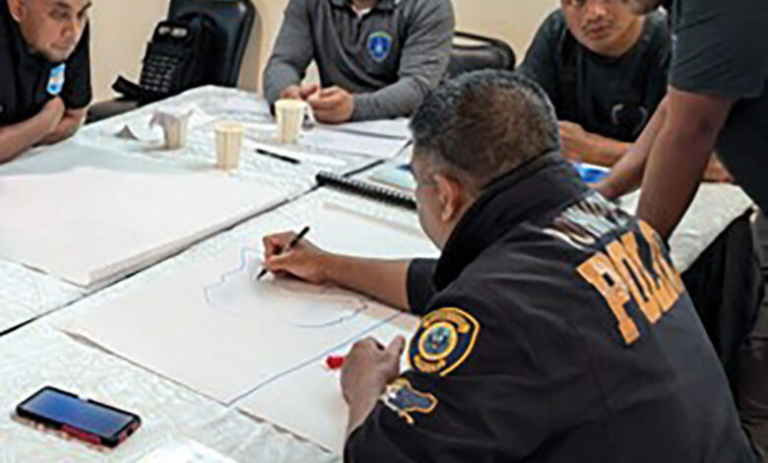
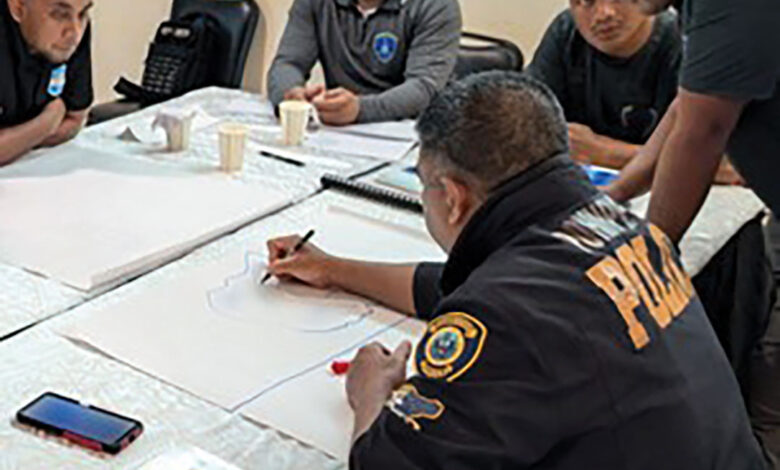
Building partner capacity across the Indo-Pacific also demands a deliberate and sustained approach. From Southeast Asia to Oceania, JIATF West works closely with other U.S. agencies to provide tailored training and critical infrastructure support.
Based on each partner country’s needs, JIATF West offers assistance in areas including narcotics and financial investigations, maritime interdiction, and open-source intelligence to equip them with the skills and knowledge to counter transnational crime. The task force also supports critical, small-scale infrastructure improvements, including for border checkpoints, training facilities and operational centers. These initiatives strengthen partner nation capacity to combat illicit trafficking and other security threats, while fostering stronger, more collaborative relationships with the U.S.
With many countries facing limited law enforcement resources and infrastructure, the training facilitated by JIATF West and other U.S. agencies helps bridge gaps, preparing partners to better meet challenges.
For example, a JIATF West tactical training center completed for the Royal Thai Police in 2020 provides a realistic environment, including an indoor facility designed to resemble a town with a bank, store, bus stop and traffic lights.
As technological change rapidly reshapes the global landscape, JIATF West remains focused on long-term strategic goals while maintaining operational agility and flexibility. By building partnerships through sustained engagement and a shared commitment to regional stability, the task force is dedicated to dismantling drug trafficking and transnational criminal networks to safeguard security and prosperity in the Indo-Pacific.
A Network of Support
The U.S. Joint Interagency Task Force (JIATF) West is built on a foundation of cooperation, partnering with U.S. and other national agencies to combine military and law enforcement capabilities to counter transnational crime in the Indo-Pacific.
Such partnerships enable synergy and effectiveness by:
- Applying U.S. Department of War and intelligence resources to investigations.
- Building partner nation law enforcement capabilities to increase effectiveness.
- Bringing partners into a wider network of law enforcement agencies.
JIATF West programs include:
- Intelligence analysis and related expertise to support investigations.
- Identification and monitoring of trafficking and other illicit activities.
- Facilitation of training, including investigations, search and seizure, maritime skills, small craft maintenance, financial investigative techniques, open-source intelligence, and analytical methodologies.
- Small-scale infrastructure improvements, including for training facilities, operations centers and border checkpoints.
About the Author