
Japan’s provision of heavy engineering equipment to the Papua New Guinea Defence Force (PNGDF) reflects Tokyo’s investment in regional resilience and its strategy of shaping Indo-Pacific security dynamics through capacity-building.
The initiative, coordinated under Japan’s Official Security Assistance (OSA) framework, coincided with the 50th anniversaries in 2025 of PNG’s independence and diplomatic ties between the nations. The $2.5 million grant provides critical machinery to the PNGDF’s engineering battalion in Lae, the country’s second-largest city.
“OSA represents Japan’s strategic pivot from checkbook diplomacy to actually shaping the regional security architecture through capacity-building,” Stephen Nagy, a professor at Tokyo’s International Christian University, told FORUM.
The assistance package, which focuses on dual-use assets for disaster response and infrastructure development, bolsters PNG’s capacity to sustain mobility and operations across its diverse terrain. Such capabilities are vital for responding to cyclones, landslides and floods, while also boosting deterrence against illicit maritime activity. The equipment supports a Free and Open Indo-Pacific by enabling PNG to uphold its sovereignty and the rule of law, Japan’s Foreign Ministry stated.
Unveiled in 2022, the OSA program provides equipment, supplies and infrastructure development assistance to strengthen partner nations’ security and deterrence capabilities. Recipients include Indonesia, Mongolia, the Philippines and Sri Lanka.
“Japan’s OSA functions as a strategic enabler of Tokyo’s Indo-Pacific posture, translating the 2022 National Security Strategy into tangible capacity-building,” Hiroyasu Harada, chief analyst at Japan’s Network for Security Business and Technology, told FORUM.
Tokyo’s support to PNG complements Australia’s parallel efforts under Canberra’s mutual defense pact with Port Moresby, known as the Pukpuk Treaty. Australian and Japanese initiatives are aligned to avoid duplication and enhance interoperability. Such coordination is vital in complex scenarios such as combined humanitarian missions.
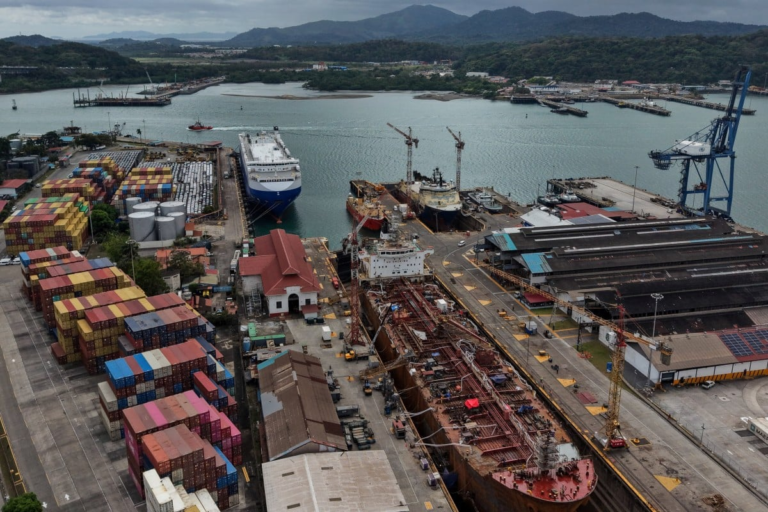
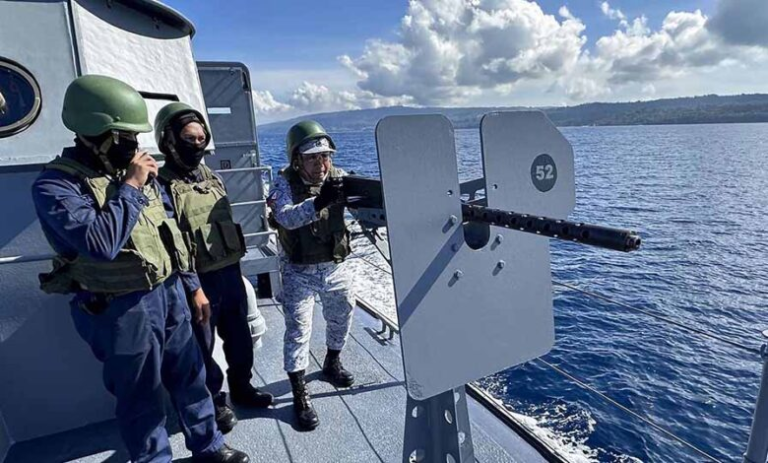
PNG sits at the intersection of the Pacific islands and Southeast Asia, along sea lines of communication vital to regional trade and military logistics. Strengthening PNG’s ability to secure its maritime domain serves regional stability and deters malign activity, such as illegal fishing, and intrusions and harassment by foreign vessels.
Through its OSA program, Tokyo is “essentially building a distributed defense network where partners can monitor and push back against gray-zone activities,” Nagy said.
The projects extend beyond equipment transfers to include sustainment, maintenance, logistics and training support, he said. The partnerships — rooted in day-to-day collaboration — set the foundation for deeper interoperability, which could prove critical in managing complex humanitarian or security contingencies, where speed and clarity are vital.
About the Author