
Beijing has temporarily adjusted how its military operates across the Indo-Pacific. This includes less aggressive behaviour from flotillas sailing deep into the region and its military engagements inside the first island chain.
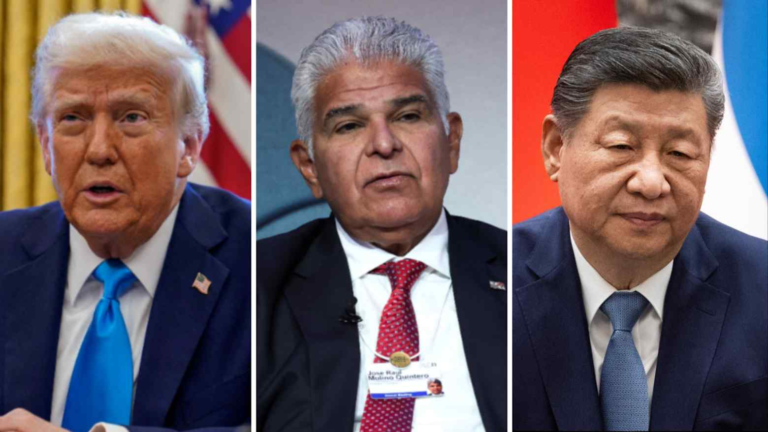
But it’s a tactical calibration, not strategic adjustment. President Xi Jinping is making the most of a geopolitical window shaped in part by Donald Trump’s return to the White House. The long-term trajectory of Chinese power projection remains unchanged.
In a parliamentary committee hearing yesterday, Defence officials confirmed that another Chinese naval task group sailed deep into the Indo-Pacific late last year, travelling into the southwest Pacific after first being detected in the Philippine Sea. Chief of the Defence Force Admiral David Johnston said the group approached Australia but stayed ‘more than 200 nautical miles’ from it. The group didn’t enter Australia’s exclusive economic zone.
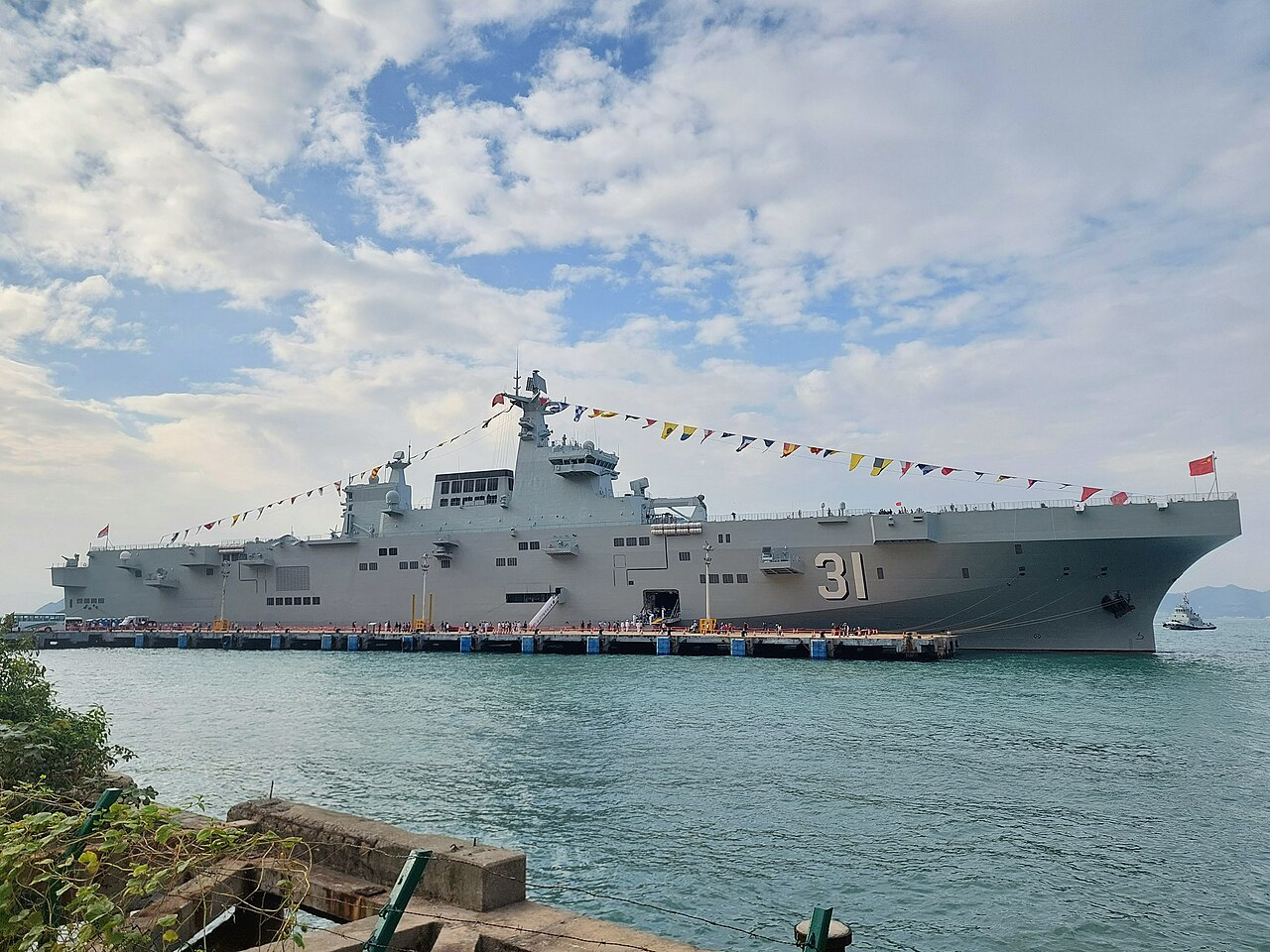
That task group’s composition was notable. According to Australian Defence Force officials and satellite imagery, it included a Type 075 (Yushen-class) amphibious assault ship, China’s largest class of amphibious ship; a Renhai-class (Type 055) guided-missile cruiser, one of China’s most powerful warships; a Jiangkai-class guided-missile frigate; and a replenishment vessel. This is the first time a Type 075 has travelled so far from Chinese waters, so the formation was more capable than the one that circumnavigated Australia in early 2025.
Australian P-8 Poseidon maritime patrol aircraft detected the group on the evening of 2 December, about 500 nautical miles (900 km) north of Palau. After sailing through the Philippine Sea and in the southwest Pacific, elements of the task group were later reported as participating in large, late-December military exercises around Taiwan called Justice Mission 2025.
But why did this task group behave less aggressively from the one that sailed around Australia in February, which conducted live-fire exercises off Australia’s east coast? And why have we not seen reporting of unsafe military intercepts involving Australia or other Western militaries in the South China Sea in recent months, despite recent analysis highlighting that China’s overall military activity remains elevated?
One explanation may be that Beijing has grown more comfortable with Canberra. But there has been no discernible change in Australia’s China policy that would justify such an assumption. Australia continues to strengthen defence cooperation with the United States and Japan, pursue AUKUS and speak out on stability across the Taiwan Strait. The shift in tone is unlikely to be about Australia itself.
Instead, larger geopolitical trends are probably at play.
Xi appears to have concluded that the Trump administration’s behaviour presents a strategic opportunity. The turbulence in Washington’s alliances, mixed messaging on commitments and a renewed focus on transactional diplomacy have created space for Beijing to present itself as a comparatively stable and responsible actor. In this context, overtly aggressive military theatrics against Western militaries would risk undermining a broader diplomatic strategy.
In recent months, Beijing has intensified diplomatic outreach. Many Western leaders have travelled to China seeking economic engagement and political dialogue. Xi has welcomed them warmly. The message has been that China is open for business and committed to global stability even as the US changes its global role.
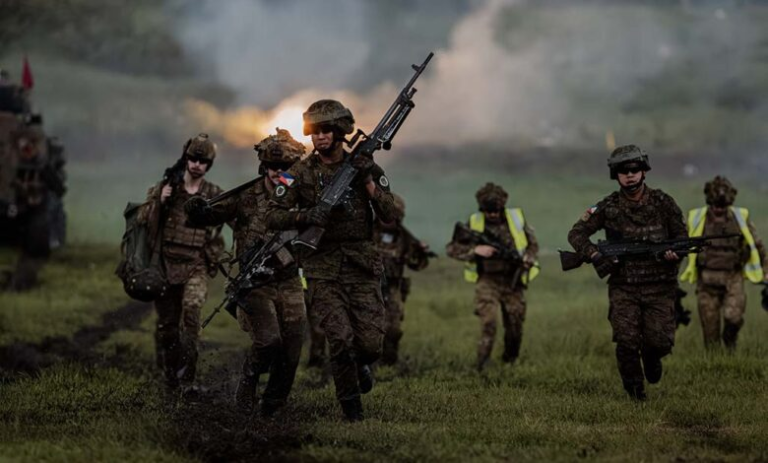
At the same time, China’s military has not slowed down. It has simply adjusted its presentation. Operations continue across the South and East China seas and beyond the first island chain, which stretches from Japan to Indonesia. Exercises around Taiwan have grown in scale and sophistication. December’s Justice Mission 2025 drills reportedly saw naval vessels of the People’s Republic operating closer to Taiwan than ever before. Air and naval integration continues to improve. Amphibious forces are being exercised alongside long-range strike assets.
What has changed is the level of visible friction with Western militaries. Unsafe intercepts and close-quarter manoeuvres have, at least temporarily, declined in public reporting. That does not mean China’s presence is weaker. It means Beijing is choosing when and how to generate tension.
This is consistent with Xi’s leadership style. Throughout his tenure, he has demonstrated an ability to dial military coercion up or down depending on the broader strategic environment. Periods of intense grey-zone pressure are followed by phases of relative calm.
The Trump factor must loom large in Xi’s mind. Leader-level talks expected in April will offer Xi an opportunity to test Washington’s red lines, particularly on Taiwan, as the US seeks a broader bargain with Beijing. If Xi thinks that US commitments are softening or that alliance cohesion is fraying, he may see greater room to manoeuvre. If, on the other hand, he concludes that Washington remains firm, the current period of moderated military signalling could quickly give way to renewed intimidation.
For countries in the Indo-Pacific, including Australia, the lesson is straightforward. Tactical shifts should not be mistaken for strategic transformation. The deployment of a task group led by a Type 075 deep into the Pacific demonstrates that China’s expeditionary capabilities are expanding. The group’s participation in Taiwan exercises underscores that the core military mission remains focused on coercion across the strait. The absence of recent unsafe intercept headlines does not signal restraint so much as recalibration.
Xi is exploiting a moment of flux in global politics. He is seeking to improve China’s reputation relative to the US, capitalise on doubts among US partners and expand Beijing’s influence across the Global South. But none of this alters China’s long-term trajectory.
About the Author