
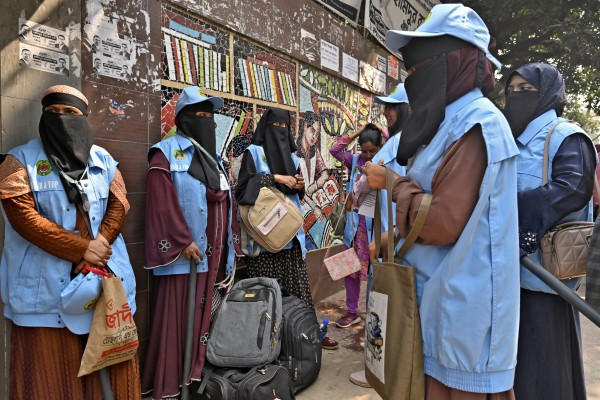
As Bangladesh goes to the polls today, the country stands at a rare political crossroads where electoral choice and constitutional redesign intersect.
The election—the first since the 2024 mass uprising that ended a long phase of single-party dominance—is being held alongside a nationwide referendum, asking voters to weigh in not only on who should govern, but on how power itself should be structured in Bangladesh.
The vote marks the culmination of an 18-month transition overseen by an interim administration headed by Nobel laureate Muhammad Yunus, who was appointed chief adviser in August 2024 amid demands for a neutral authority to steer the country out of crisis.
In a nationally televised address on the eve of polling, Yunus framed the moment as decisive, saying the election was “not just a routine political event but a moment when the people of Bangladesh will determine the course of their collective destiny.”
At the heart of this exercise is the referendum on the July Charter, a wide-ranging reform framework drafted through consultations involving political parties, reform commissions, civil society groups and student representatives.

Yunus urged voters to back the charter, arguing that its impact would extend far beyond the immediate political cycle. “A vote for the referendum is not just a seal on paper,” he said. “It will determine the direction of education, employment and the justice system in the coming days.”
The charter seeks to address entrenched governance imbalances by proposing limits on prime ministerial authority, stronger judicial independence, expanded fundamental rights, enhanced political representation for women and a recalibration of presidential powers.
Rather than voting on individual clauses, citizens are being asked to deliver a single verdict across four consolidated issues—a design intended to reconcile competing party demands, but one that has also drawn criticism for compressing complex constitutional questions into a binary choice.
A “yes” vote would give the next parliament a clear political mandate to implement the charter within a defined timeframe, effectively transforming it into a constitutional reform body.
However, the removal of an earlier provision that would have automatically enacted reforms has left enforcement dependent on political consensus.
Yunus has acknowledged that responsibility squarely, saying the interim government’s role would end with the election and that it would “hand over power with joy and pride to the newly elected government.”

If voters reject the charter, the incoming parliament would face no binding obligation to pursue its reforms, raising concerns among supporters that momentum generated by the 2024 uprising could dissipate. Even so, analysts note that public expectations and the prior endorsement of the charter by most major parties could limit how far any new government can retreat from the reform agenda.
Questions of electoral credibility loom large alongside the constitutional debate. Bangladesh’s previous three national elections were widely criticised for manipulation and violence, with the last broadly accepted free and fair contest held in 2008.
The interim authorities have implemented a portion of the Electoral Reform Commission’s recommendations, including tighter controls inside polling stations, greater administrative authority for election officials, transparency measures and provisions for overseas voting.
While these steps mark a departure from past practices, deeper reforms—such as insulating the appointment of election commissioners from political influence—remain unfinished and are tied to the charter’s fate.
The political landscape itself has been reshaped by the transition. The Awami League, which governed for 15 consecutive years, is absent from the ballot following a ban on its activities, effectively ending the long-standing rivalry with the Bangladesh Nationalist Party.
The BNP is widely seen as the strongest established contender, while newer formations—including a student-led party allied with Jamaat-e-Islami—have added uncertainty to voter alignments. Despite these shifts, most major parties have publicly backed holding the referendum, even while expressing reservations about specific institutional designs.
Beyond domestic politics, the election is also being closely watched by external powers navigating Bangladesh’s strategic importance in the Bay of Bengal and the wider Indo-Pacific.
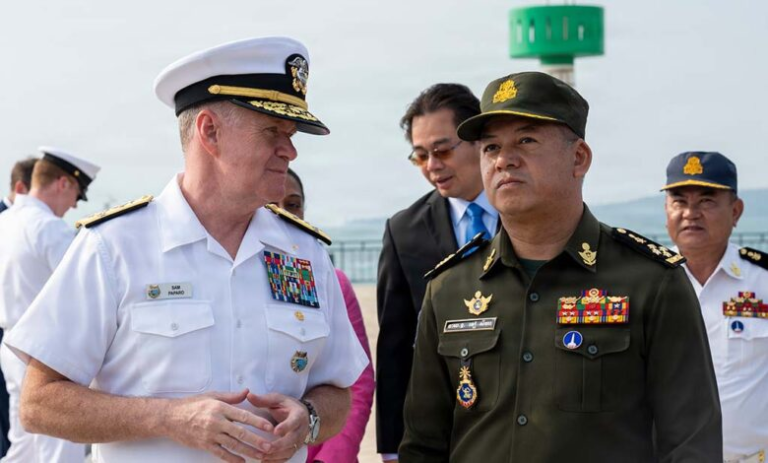
The United States has signalled interest in expanding defence engagement with Dhaka as a counterweight to China’s growing footprint, promoting alternative military platforms and closer security coordination while stressing the importance of stability and balanced regional alignments.
Washington’s outreach reflects a broader effort to prevent Bangladesh from becoming overly dependent on Chinese defence technology and infrastructure.
China, meanwhile, is expected to consolidate and possibly expand its influence after the election. Beijing has deepened its economic and military ties with Bangladesh over the past decade, emerging as its largest trading partner and a major source of investment and defence cooperation.
High-profile projects and sustained diplomatic engagement have strengthened China’s leverage at a time of political transition, creating incentives for future governments to rely on Chinese backing even as they seek to avoid overtly alienating India.
For India, this altered political and external landscape carries clear security implications. The absence of the Awami League—a government that maintained close cooperation with New Delhi on counterterrorism and border management—has removed a familiar stabilising anchor.
At the same time, the growing electoral relevance of Islamist actors and the intensifying competition between the United States and China add layers of uncertainty to Bangladesh’s post-election trajectory.
Past episodes of political instability in Bangladesh have often coincided with increased pressure on minority communities and the re-emergence of cross-border extremist networks.
Whether the post-election order produces a strong, reform-driven government or a fragmented parliament will therefore matter well beyond Dhaka.
Ultimately, today’s vote is less a conclusion than a point of departure.
Yunus has repeatedly emphasised that the interim government’s mandate ends with the restoration of an elected authority, but the durability of Bangladesh’s democratic reset will depend on what follows.
For New Delhi, the outcome will be measured less by the rhetoric of reform than by its effects on the ground.
A Bangladesh that emerges with stable institutions and constrained executive power would reinforce security cooperation, while a prolonged or fragmented transition—especially one that expands space for Islamist mobilisation and external leverage—would sharpen India’s concerns along its eastern frontier.
About the Author