
outh Korea has become a new focal point amid an escalating feud between China and Japan.
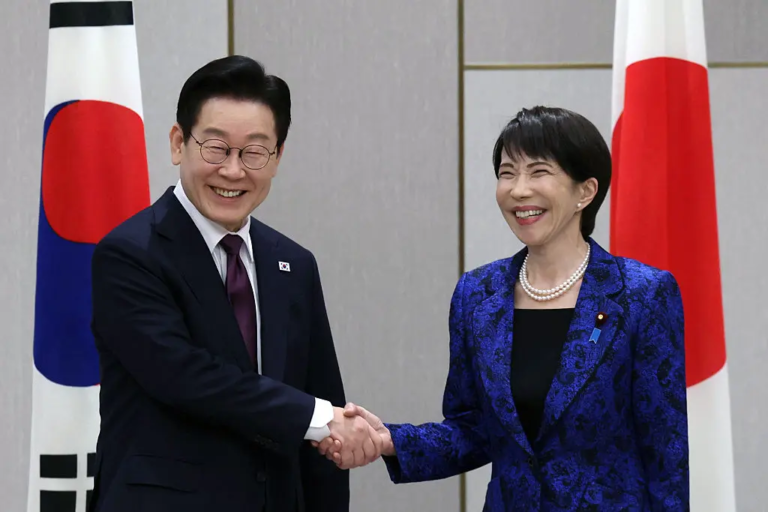
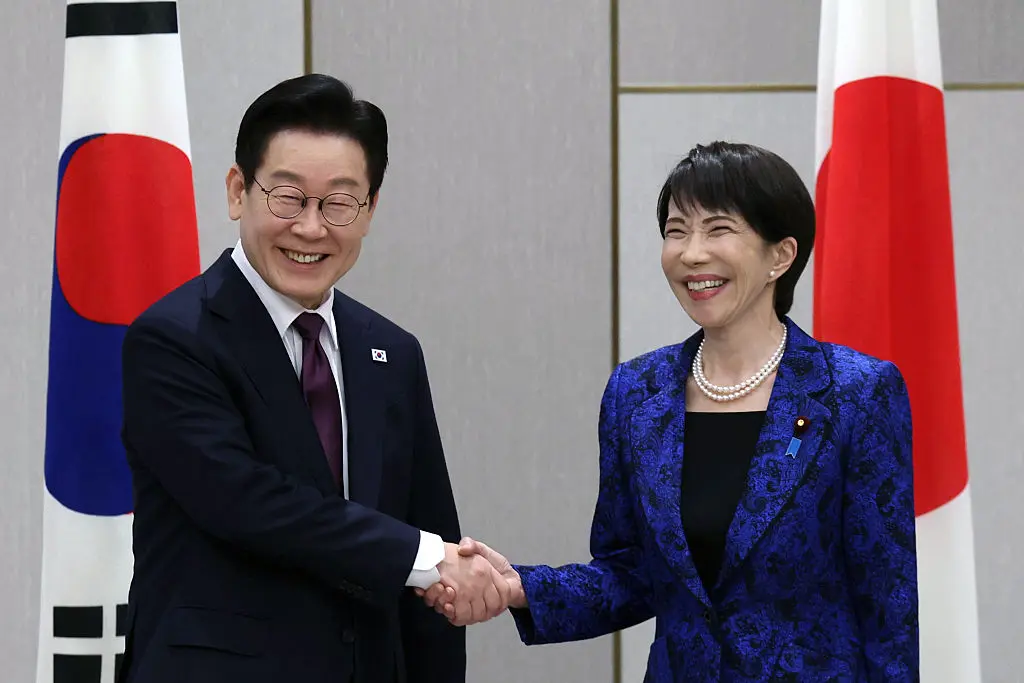
Japanese Prime Minister Sanae Takaichi met with South Korean President Lee Jae-Myung on Tuesday at a summit in Takaichi’s home prefecture of Nara. It is the second time the two leaders have met in person since Takaichi came into power in October.
“Although we have painful past experiences, it has been 60 years since the normalization of diplomatic relations between Korea and Japan, and we are starting a new 60 years,” Lee said in his opening remarks. “In the current complex and dizzying international order, cooperation between South Korea and Japan is more important than ever.”
“You mentioned the next 60 years. I am delighted that we were able to continuously demonstrate the resilience of Korea-Japan relations last year, which marked the 60th anniversary of diplomatic normalization,” Takaichi said. “I hope to make this year, starting with President Lee’s visit to Japan, a year that elevates Korea-Japan relations to a higher level.”
The meeting comes as Tokyo seeks to rein in a deepening diplomatic and trade rift with China while strengthening ties with allies to counter Beijing’s attempts to isolate Japan. South Korean officials have said that Lee and Takaichi would likely touch on the tensions between China and Japan on Lee’s two-day visit.
But the meeting also comes just a week after Lee met with Chinese President Xi Jinping on a visit to Beijing—the first time a South Korean President has visited China since 2019 as Lee moves to normalize relations with China. Lee was accompanied by a 400-member business delegation days after a group of Japanese executives put their annual visit to Beijing on hold for the first time in 13 years, suggesting that corporate diplomacy has strained under China-Japan tensions.
Li Hao, an associate professor at the University of Tokyo and a research fellow at the Japan Institute of International Affairs, tells TIME that Lee is caught in a balancing act as he seeks to improve ties with China—the world’s second largest economy—and Japan, a key U.S. ally.
“South Korea is sandwiched by both China and Japan,” Li says. Lee is likely to remain cautious in his public statements about the feud, but appears happy to engage in what some have called “shuttle diplomacy” between the quarreling nations—perhaps because South Korea stands to reap some benefits, Li says.
China ices Japan out
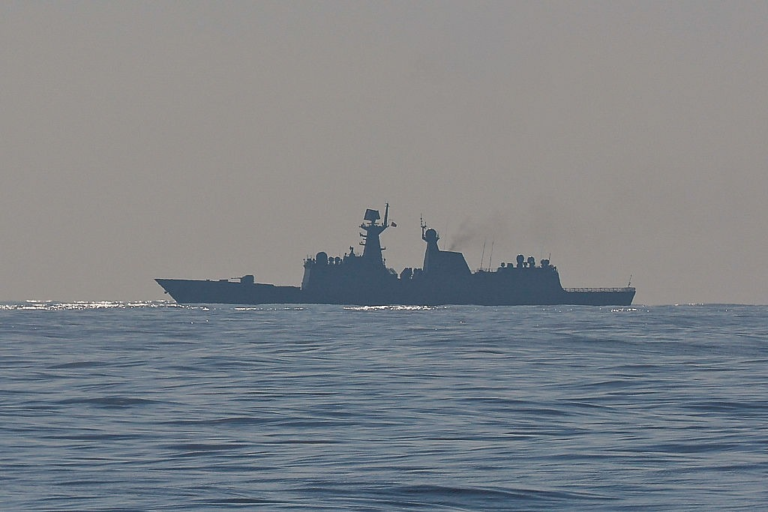
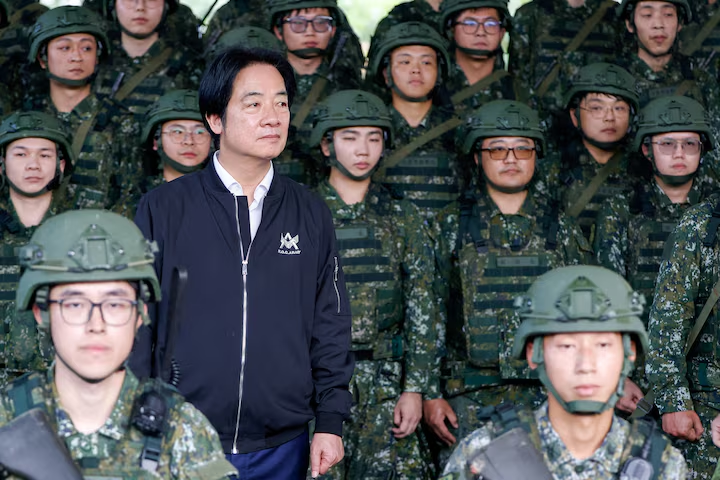
Relations between China and Japan have deteriorated since early November when Takaichi suggested that a Chinese attack on Taiwan could be considered a “survival-threatening situation,” which would permit Japan to take military action. China regards Taiwan as its own territory and maintains its right to take control of the island one day, including by force.
Takaichi has refused to retract her comments, despite China’s demands. Kei Koga, an associate professor at Singapore-based Nanyang Technological University’s Public Policy and Global Affairs Program, previously told TIME that Takaichi’s comments do not significantly deviate from Japan’s long-held position on Taiwan.
Instead, experts have suggested that Beijing sees this as an opportunity to make clear its red lines, which may have become increasingly important in light of U.S. military intervention in Venezuela.
China has issued travel advisories to its citizens about travelling to Japan, appeared to implement an unofficial ban on Japanese entertainment, and reimposed a ban on Japanese seafood imports. On Jan. 6, a day after Xi’s meeting with Lee, China announced a ban on the export of more than 800 dual-use goods to Japan. The new export controls restrict technologies, chemicals, products, or software that could be used for military purposes, including some rare earth elements. The move was met with a protest by Japan’s Foreign Ministry.
About the Author