
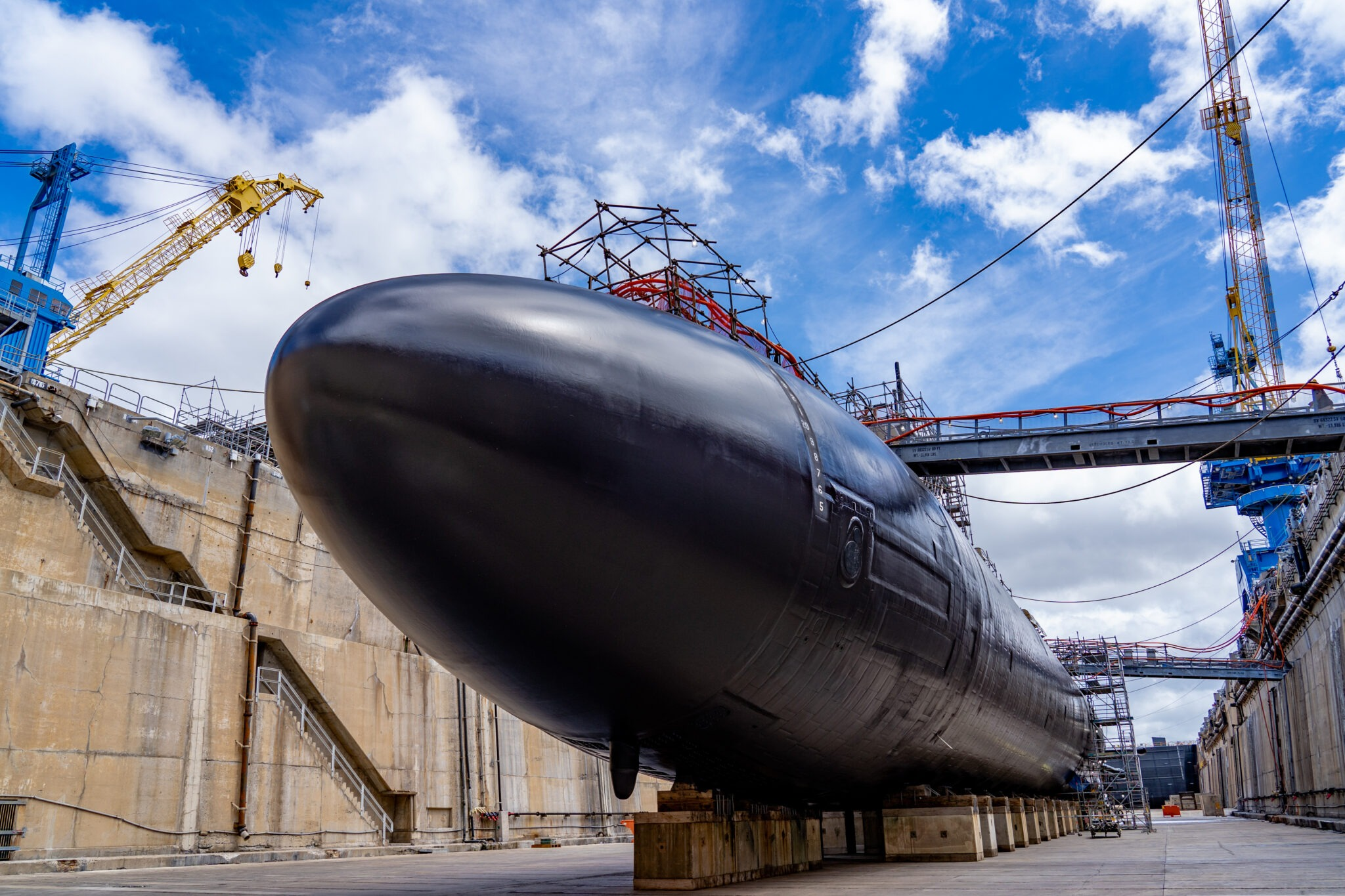
AUKUS needs its own visa. The security partnership’s Pillar One needs a smooth path for workers to move between member countries to help fill skills shortages that are impeding the effort to build and operate nuclear submarines.
Studies reveal that Australia has an estimated shortfall of 110,000 skilled trades workers. Major AUKUS projects, such as the $30 billion expansion of Perth’s Henderson shipyard, are competing for talent within the same constrained labour pool as large infrastructure and energy projects.
While existing visa programs can facilitate the entry of skilled workers into Australia, the United States or Britain, they’re not fully fit for purpose for this time-sensitive project. The US E-3 visa is available to Australians in speciality occupations but has academic requirements, while Australia’s Skills in Demand visa presently has waiting times of up to seven months.
If AUKUS is to succeed in coming decades, we must plug the workforce gap by changing how we process skilled workers’ visas. Where one AUKUS country suffers a shortage that people from either or both of its partners can fill, worker movement must be as easy as possible.
Skilled workers for AUKUS must be granted access to priority processing, consistent eligibility criteria, mutual recognition of security clearances, and streamlined customs and immigration processes. The easiest way to do this is by creating an AUKUS-specific visa in each member country, similar to the APAC business-traveller card and the US Global Entry Program.
As it stands, employers are finding it extremely difficult to manage the spectrum of immigration requirements to ensure seamless movement of talent across borders.
In the US, employment visas such as the E-3 and H-1B require sponsorship by a local entity, posing challenges for foreign small to medium enterprises that lack an established local presence. The position in Britain is similar. US visa programs, which typically focus on managerial, executive, or specialised knowledge roles, do not sufficiently cater for entry for skilled trades workers.
Meanwhile, Australia, the US and Britain have been tightening their already highly regulated immigration systems.
In Australia, companies dealing with foreign employees must beware key compliance measures that have been recently introduced. These include civil liability penalties of $66,000 for each offence and criminal penalties of $99,000 or a maximum of two years in prison for each offence, or both. New powers granted to the minister for home affairs can also declare an individual or organisation to be a ‘prohibited employer’. The US and Britain have introduced similar penalties.
We have seen the problem close up in our work for international employee-mobility company of which we are partners, Vialto. The company has been helping defence-related companies move workers across borders, but many of those clients are finding it extremely difficult to manage the spectrum of immigration requirements.
Governments have little considered the complications of delivering a trilateral agreement that requires workforce mobility between countries that each have different visa requirements, tax arrangements, security protocols and employee entitlements.
Australia is competing in an increasingly intense global race for talent. To stay ahead, it’s crucial we recognise the value of global expertise by removing some of the hoops skilled workers are forced to jump through. This must work both ways: Australia needs people from Britain and the US to make AUKUS Pillar One work, but its partners also need Australian submariners, defence engineers and trades workers.
AUKUS is creating labour shortages that the partners must help each other fill. An AUKUS visa would form part of the broader workforce strategy by granting skilled workers the mobility they need to transfer when and where projects are bottlenecked, ensuring Pillar One remains on track.
About the Author