

Australia and the Philippines expect to formalize a defense agreement over the next year to modernize and expand their long-standing military partnership.
At the Manila Dialogue on the South China Sea in November 2025, Australian Ambassador to the Philippines Marc Innes-Brown said the upcoming accord represents a significant expansion in defense collaboration and the “evolving environment in the Indo-Pacific.”
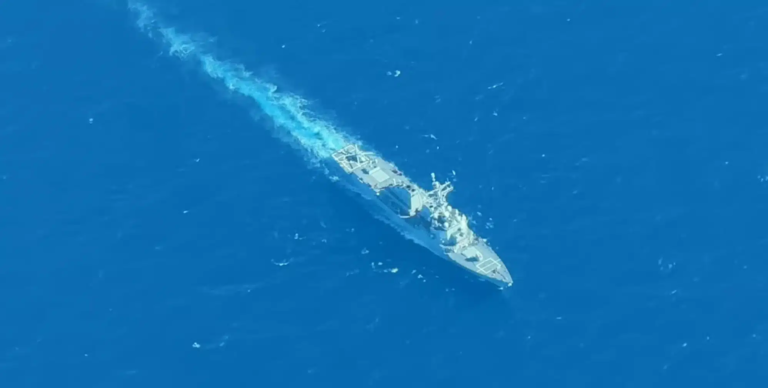
The agreement will cover areas such as maritime domain awareness, joint operational planning, cybersecurity and defense infrastructure development, Innes-Brown said. It will have a strong South China Sea dimension, reflecting the nations’ stepped-up joint patrols and exercises, including with their mutual ally, the United States, in response to China’s increasing belligerence in the vital global trade route.
“The breadth and depth of our cooperation have evolved,” he said. “Our two defense ministers decided that we needed to refresh the agreement to respond to this significant expansion and the changing security environment.”
Canberra and Manila are bound by a series of defense pacts, including a 1995 defense cooperation accord and a Status of Visiting Forces Agreement ratified in 2012.
In August 2025, Australian Defence Minister Richard Marles and Philippine Defense Secretary Gilberto Teodoro Jr. announced that the new framework would include eight infrastructure projects across five locations in the Philippines.
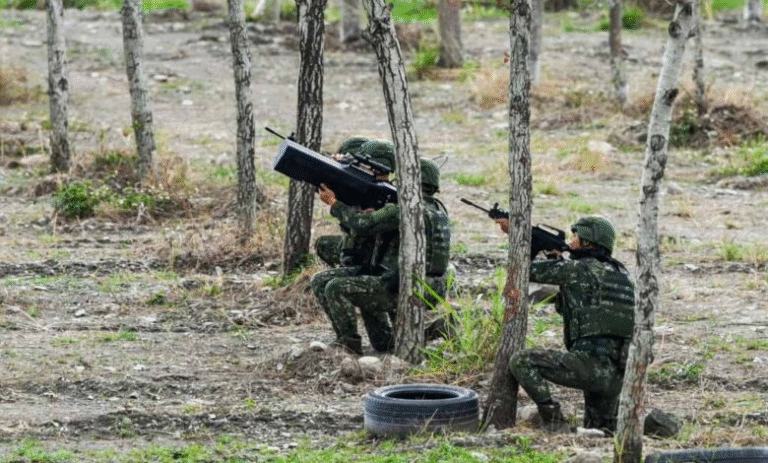
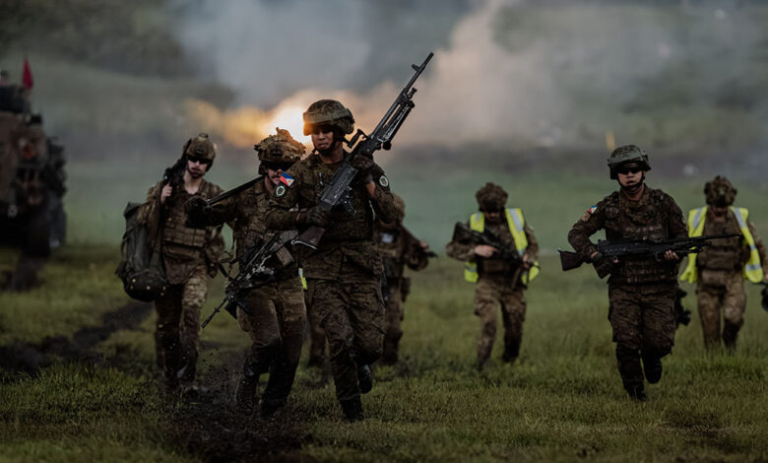
That same month, thousands of Australian Defence Force and Armed Forces of the Philippines personnel trained with Canadian and U.S. forces during Exercise Alon around the Philippine islands of Luzon and Palawan.
Australian and Philippine forces also joined a maritime cooperative activity in the South China Sea in late October 2025 alongside New Zealand and the U.S., days after a Chinese fighter jet harassed a Royal Australian Air Force P-8A patrol aircraft over the sea. Canberra condemned the incident as “unsafe and unprofessional.”
With China driving what Marles called “the biggest military buildup in the world today,” Australia faces growing risks in protecting maritime trade routes, particularly in the South China Sea.
In response, Australia is boosting defense spending to develop a “more capable, lethal, long-range navy,” Marles said, including the planned construction of conventionally armed, nuclear-powered submarines under the AUKUS partnership with the United Kingdom and the U.S.
The expanded Australia-Philippines pact comes amid a regional push for multilateral coordination. In early November 2025, the nations’ defense leaders joined their counterparts from Japan and the U.S. for talks in Kuala Lumpur, Malaysia, where they expressed support for establishing a cooperation council for Indo-Pacific defense chiefs.
The Philippine National Defense Department said the council would help ensure “greater alignment between policy and operational objectives,” the Philippine Daily Inquirer newspaper reported. The development signals Manila’s increasing engagement in defense groupings beyond traditional bilateral pacts and positions it as part of a “southern node” of regional security architecture.
The forthcoming defense agreement with Australia is shaped by escalating tensions with China, incorporating expanded maritime surveillance and joint operational planning in the South China Sea, The Diplomat magazine reported. The aim is to deepen cooperation and sharpen collective deterrence.
It is a further indication of the nations’ enduring security ties. “Australian forces were heavily involved in the liberation of the Philippines at the end of World War II and have had significant cooperation with the Philippines ever since,” Innes-Brown said.
About the Author