
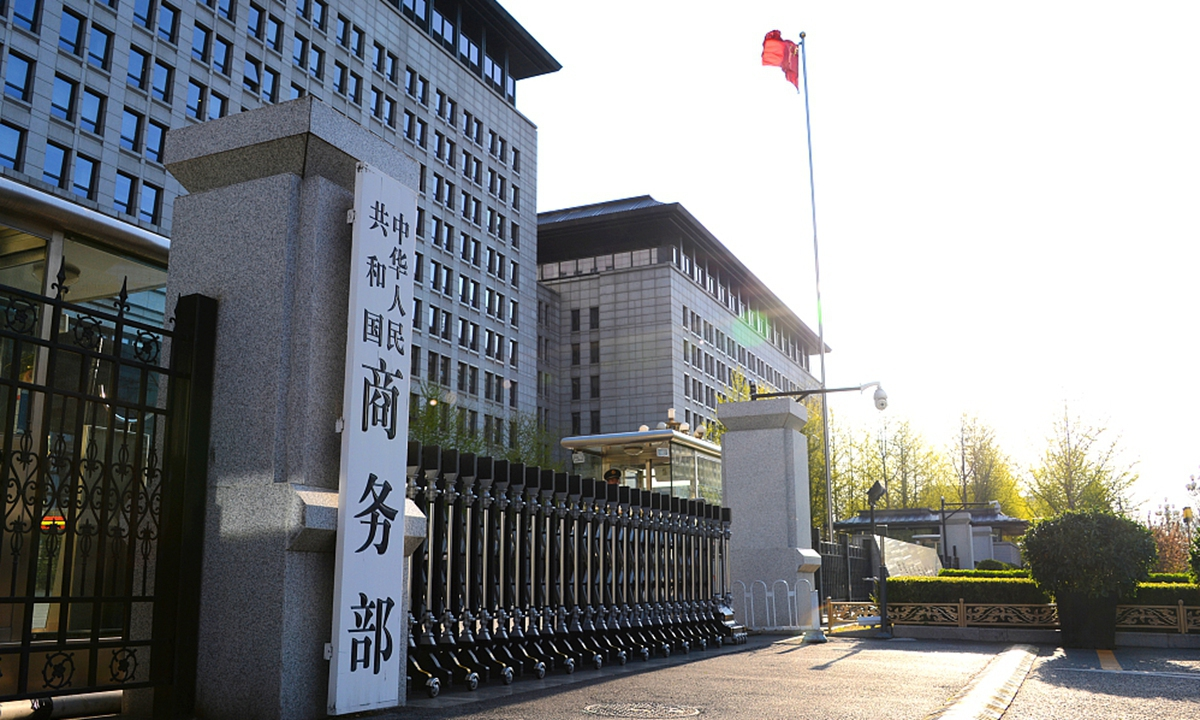
China will impose tariffs on certain dairy products imported from the EU ranging from 7.4 to 11.7 percent, starting from Friday, for a period of five years, China’s Ministry of Commerce (MOFCOM) announced on Thursday, as it released the final ruling of its anti-subsidy investigation.
The latest move is a lawful measure from the Chinese side to better safeguard the interests of the domestic industry while ensuring a fair, healthy, and sustainable market environment for all, a Chinese expert said.
The countervailing investigation into EU dairy imports was launched on August 21, 2024, following applications from the Dairy Association of China and the China Dairy Industry Association, after the Global Times learned exclusively in June 2024 that such a move was under consideration.
Adhering to the principles of fairness, impartiality, openness, and transparency, the MOFCOM conducted the investigation strictly in accordance with China’s laws and regulations as well as relevant World Trade Organization (WTO) rules, widely consulted all stakeholders, fully safeguarded their rights, and reached an objective and fair conclusion, a MOFCOM spokesperson said on Thursday in responding to a media request for comment regarding the final ruling.
The ruling report shows that the investigated dairy products imported from the EU received subsidies, caused material injury to the relevant domestic industry in China, and that a causal link exists between the subsidies and the injury, according to the spokesperson.
This move aims to better safeguard the interests of the domestic industry while ensuring a fair, lawful, healthy, and level playing field in the market, analysts said.
“Unfair trade practices from the EU have affected the Chinese dairy sector,” Li Yong, an executive council member of the China Society for WTO Studies, told the Global Times on Thursday, noting that implementing the corresponding anti-subsidy measures is both appropriate and timely, and in line with the WTO rules, while providing domestic producers with reassurance that there is a way to overcome the current challenges.
Verifiable facts show that the EU’s Common Agricultural Policy (CAP) provides massive support to the dairy sector, accounting for a significant share of agricultural factor income in the EU.
According to official data from the EU, the bloc’s dairy sector subsidies account for more than 20 percent of farm income in some low-subsidy countries and even reach over 70-90 percent in certain high-subsidy countries.
Taking all subsidies into account, total EU support in agricultural income reached 33 percent of agricultural income on average in the EU, other data from the official website of the European Commission shows.
“The CAP’s massive subsidies to the dairy industry have caused shocks and damage to domestic industries,” Jian Junbo, director of the Center for China-Europe Relations at Fudan University’s Institute of International Studies, told the Global Times on Thursday, noting that these subsidies have created an unfair competitive advantage, not only distorting production incentives and causing output to exceed internal EU demand, but also pushing the surplus into international markets, lowering prices and increasing pressure on importing countries, including China.
In responding to the situation, in December the MOFCOM announced the decision to impose temporary countervailing measures on certain EU-origin dairy products, with ad valorem countervailing duty rates ranging from 21.9 to 42.7 percent, citing findings that subsidized imports had caused material injury to China’s domestic industry.
Notably, the final subsidy rates announced on Thursday are much lower than the previous temporary rates, which experts said once again reflects that the decision was made after a thorough and careful investigation, taking into account the actual impact on the domestic industry.
“The relatively lower subsidy rates reflect that the investigation authority, in its ruling process, fully considered the concerns of all parties, including EU companies, ensuring that the conclusion is objective and fair,” said Jian.
About the Author