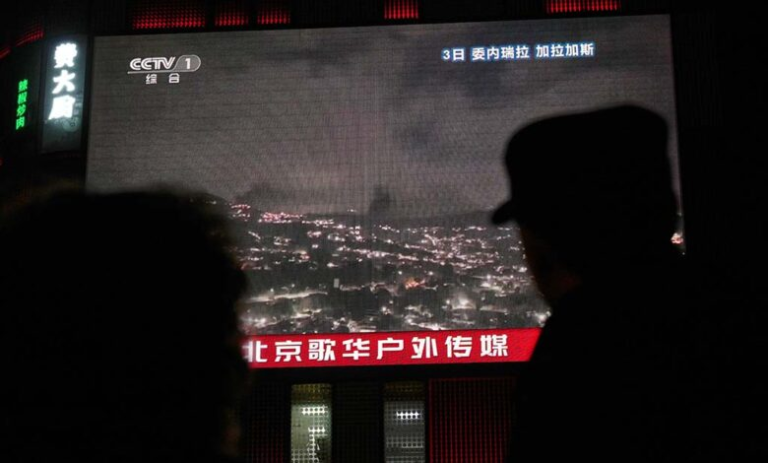

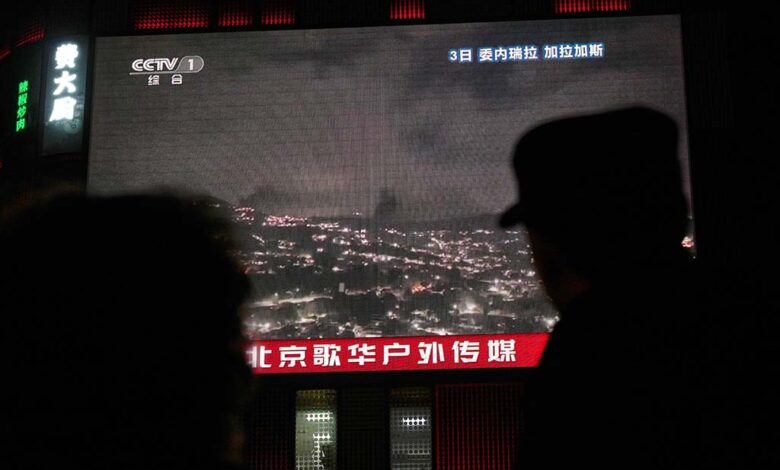
The United States military operation that captured wanted Venezuelan President Nicolás Maduro in January 2026 exposed the inferiority of Venezuela’s imported defense systems, including China-produced radar and Russian-manufactured anti-aircraft missiles and radar, analysts say.
The strike, called Operation Absolute Resolve, showed that U.S. weapons and equipment remain “unmatched,” according to some regional officials. The U.S. deployed 150 aircraft and integrated electronic attack and nonkinetic effects to suppress Venezuelan defenses and seize Maduro and his wife, Cilia Flores, from their fortified compound in Caracas. The couple were extradited to the U.S. on charges of conspiring to import cocaine into the U.S. and possessing machine guns.
International observers assessed that Maduro lost his nation’s 2024 presidential election, but he refused to relinquish power. As a result, nations worldwide, including the U.S., have treated Venezuela’s opposition party as the legitimately elected government.
Beijing sold its JY-27A radar to Venezuela and other buyers as capable of detecting stealth aircraft. China claimed the long-range air surveillance and guidance radar was reliable, mobile and resistant to jamming. The manufacturer, the state-owned China Electronics Technology Group Corp., said the radar could detect stealth aircraft at nearly 400 kilometers.
The radar, however, failed to detect U.S. fighter jets and other aircraft, allowing special operations forces to fly helicopters to Caracas without resistance, said Gen. Dan Caine, chairman of the U.S. Joint Chiefs of Staff.
Venezuela spent about $2 billion on Russian S-300 air defense missiles along with support radar and communications linked to the Chinese JY-27A system. Moscow also supplied the Pantsir-S1, a gun-missile hybrid engineered to disable drones and helicopters. Neither the S-300s nor the Pantsir-S1 fired, analysts said.
It was an embarrassing failure for the Chinese- and Russian-made defense systems, particularly for Beijing as it touts its high-tech military hardware to foreign markets.
“Any nation around the world with Chinese defense equipment is checking their air defenses and wondering how safe they actually are,” Michael Sobolik, a senior fellow at the Hudson Institute think tank in the U.S., told the Reuters news agency.
The U.S. operation exposed Beijing’s performance claims as baseless, analysts say.
“A system built to look modern on paper and intimidating in propaganda falls apart under the demands of real combat,” retired Taiwan Maj. Gen. Yu Tsung-chi, former president of the Political Warfare College at Taiwan’s National Defense University, told reporters.
The operation in Venezuela marked yet another high-profile failure for China-manufactured air defenses. The four-day clash between India and Pakistan in May 2025 exposed the poor performance of China-produced systems used by Pakistan’s military.
Indian airstrikes hit multiple targets in Pakistan, meaning the missiles penetrated air defenses reliant on Chinese surface-to-air missiles, producing “bad optics for Beijing’s arms export credibility,” analysts said.
About the Author