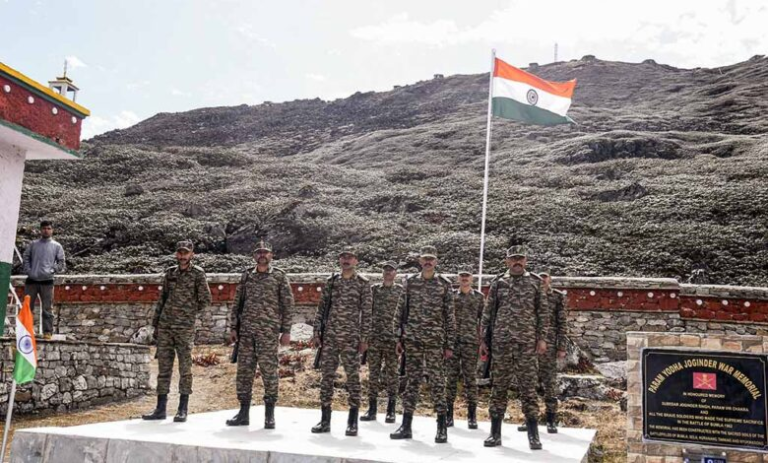

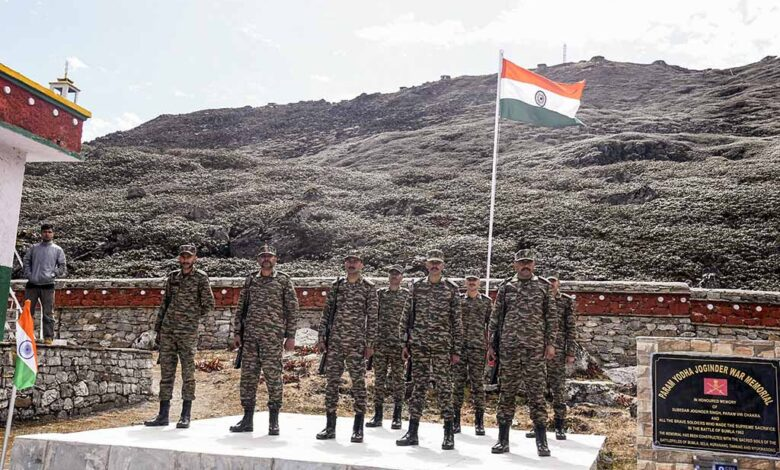
Possession of the Indian state of Arunachal Pradesh is a Chinese Communist Party priority despite diplomatic attempts by Beijing and New Delhi to stabilize relations and settle disputes regarding their ill-defined 3,488-kilometer border, the United States Department of War says.
The Pentagon’s annual report on military and security developments relating to China cites Arunachal Pradesh among Beijing’s “core interests,” along with overcoming resistance in China-claimed Taiwan and territories in the East China and South China seas.
China’s priorities are not subject to negotiation or compromise, the December 2025 report says. Beijing’s stance disregards New Delhi’s sovereignty claim to the mostly mountainous Arunachal Pradesh, which is based on a 1914 boundary called the McMahon Line drawn by the Republic of China, then-independent Tibet and the United Kingdom. The People’s Republic of China, established in 1949, rejects the boundary’s validity.
Border disputes have flared between the world’s two most populous countries for decades, including a 1962 war and a 2020 confrontation that left Indian and Chinese troops dead. Disagreements are partly fueled by the rugged terrain, which makes demarcation difficult along the border, called the Line of Actual Control (LAC).
China infuriated India when it designated Chinese names for dozens of Arunachal Pradesh locations, even reportedly painting Chinese characters on stones in remote areas to reinforce its claim, the Australia-based Lowy Institute think tank reported in December 2025.
“Assigning invented names will not alter the reality that Arunachal Pradesh is, has been, and will always be an integral and inalienable part of India,” Indian Foreign Ministry spokesperson Randhir Jaiswal said in April 2024.
The nuclear-armed countries also have sparred over construction of mega dams on rivers that descend from Tibet, which China forcibly annexed in the 1950s. China’s hydropower projects, the world’s largest, potentially threaten downstream communities, including in Arunachal Pradesh.
Despite such provocations, tensions appeared to ease in October 2024 when leaders announced a bilateral agreement to withdraw from sites along the LAC.
U.S. defense officials believe Beijing sought to stabilize relations with New Delhi to prevent deepening India-U.S. ties, but India remains skeptical of China’s actions and motives, the Pentagon reported.
About the Author