
Technological resilience is emerging as a key aspect of Indonesia’s foreign policy. For Australia, this shift presents opportunities for deeper cooperation with one of its closest neighbours. Canberra can strengthen Jakarta’s resistance against hybrid threats through capacity-building, infrastructure development and regulatory reform.
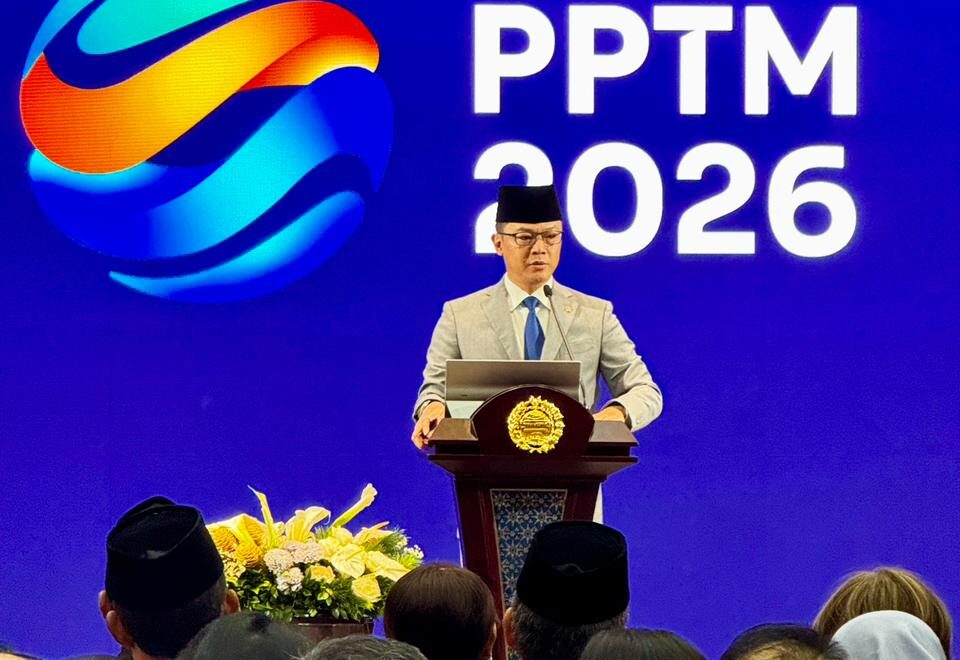
In his annual address on 14 January, Indonesian Foreign Minister Sugiono said national survival required national resilience. Although Australia may not share Indonesia’s non-alignment approach, Canberra should take advantage of cooperation opportunities, especially in tech domains.
The minister said cyber space, artificial intelligence and dual-use technologies were transforming the global security landscape. Although he didn’t go as far as saying so, it’s clear that Indonesia is increasingly treating technology as a domain of foreign policy, alongside defence, economics and traditional diplomacy.
According to the minister, we are living in a grey zone ‘without a clear boundary between peace and war.’
Such an environment allows malicious actors exploit tension and ambiguity through hybrid threats, which combine various tools to place pressure on multiple domains at once—including cyber, information, the economy, politics and territorial stability—without triggering an open war.
He was particularly wary of economic coercion. Jakarta aimed to address this threat through its ‘strategic diversification’ approach, seeking engagement with groupings such as the OECD, the G20, BRICS and the Association of Southeast Asian Nations.
Overreliance can be exploited, and this diversification avoids dependence on any one block, trade partner or critical technology supplier.
But resilience against hybrid threats does not come solely from having diversity in partnerships. When it comes to technology, it requires capacity, reliable and trusted partners, secure infrastructure, and effective regulations and standards. This is where Australia can contribute.
Australia and Indonesia have already worked together on counterterrorism and law enforcement, including through the establishment of the Jakarta Centre for Law Enforcement Cooperation in 1997. They have also cooperated on maritime security, for example through Operation Jawline Arafura, which involved coordinated patrols targeting illegal maritime activities. As cyber threats increasingly shape our strategic risk environment, Canberra and Jakarta should cooperate to develop critical information infrastructure, building on last year’s Australia-Indonesia Treaty on Common Security.
As Australia makes few technology products itself, it can’t offer Indonesia hardware. It also can’t restrict Jakarta’s technological choices by labelling certain developers as unacceptable, since Indonesia’s telecommunications sector is already dominated by Chinese suppliers that are preferred for their cost competitiveness. However, Canberra can help Jakarta strengthen the foundations of a secure and trusted digital ecosystem. Three practical options stand out.
First, Australia could expand Indonesia’s capacity through cyber and critical-infrastructure cooperation. Indonesia’s size,digital growth and geographic proximity can directly affect Australia’s trade, security and regional stability. Supportcould include governance development, hybrid threats awareness programs and exercises focused on building coordinated responses. The goal would be to bolster government networks and supporting infrastructure while closing digital gaps that could undermine cyber resilience. Because hybrid threats blur the line between military and civilian domains, digital resilience in civil society should also be included. This could involve building on ASPI’s virtual cyber diplomacy course—funded by the Department of Foreign Affairs and Trade—through further engagement, for example through student cyber policy competitions.
Second, where appropriate, Canberra should support Jakarta’s cyber and digital diplomacy efforts to shape and implement norms of responsible state behaviour, including discussing possible coordinated responses to cybersecurity incidents. Standards for commercial use of cyber intrusion tools could be another area for cooperation and trust-building, though Jakarta may need a bit of convincing.
Third, Australia should invest in Indonesia’s infrastructure where possible. Hybrid resilience requires technological capability. Canberra has already made important contributions through scholarships for digital technology, regulator-to-regulator cooperation and joint research centres. It could also partner with private-sector entities. This could look similar to Australia’s cooperation with Google to develop subsea cable infrastructure in Papua New Guinea.
Building resilience must be a collective effort, as we are only as strong as our weakest link. A resilient and prosperous Indonesia is in Australia’s interest.
About the Author