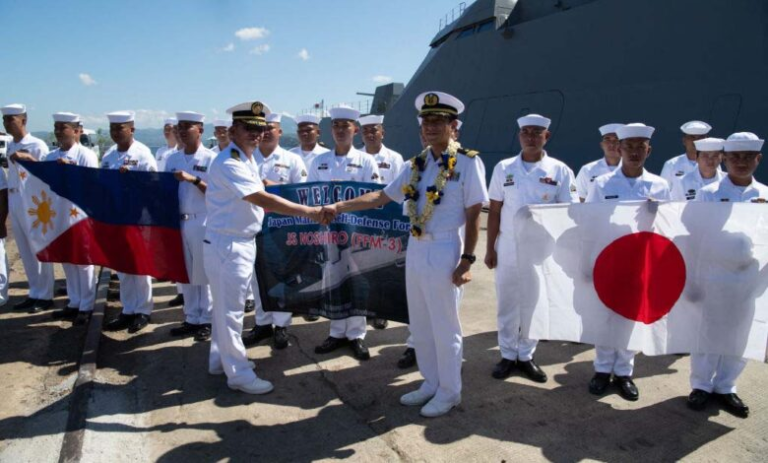

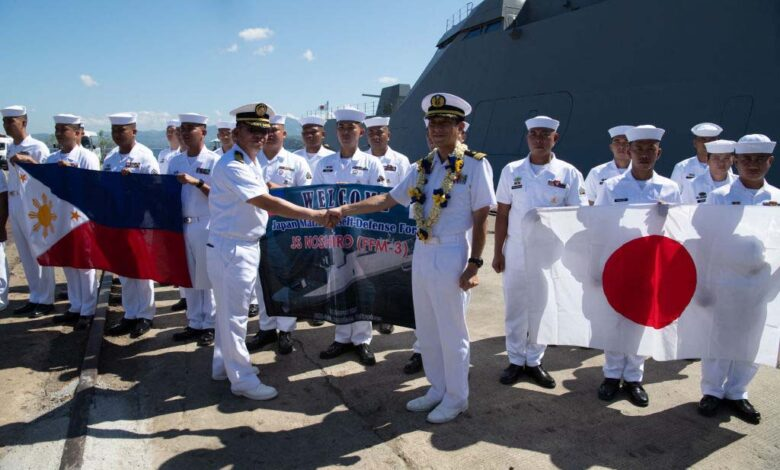
Japan and the Philippines signed a defense pact allowing the tax-free provision of ammunition, fuel, food and other necessities when their forces stage joint training to boost deterrence and bolster preparation for natural disasters.
Japan and the Philippines, longtime treaty allies of the United States, have territorial disputes with China in the East China and South China seas, respectively.
Japanese Foreign Minister Toshimitsu Motegi and Philippine Foreign Affairs Secretary Theresa Lazaro signed the acquisition and cross-service agreement in Manila in mid-January 2026. Japan also announced new security and economic development assistance to the Philippines, including funding for security boat shelters and expanding internet access in southern Philippine provinces once affected by a separatist rebellion.
“We both recognized the value of promoting the rule of law, including the freedom of navigation and overflight, especially in the South China Sea,” Lazaro said.
Motegi said he and Lazaro “concurred on continuing to oppose unilateral attempts to change the status quo by force or coercion in the East and South China seas.”
The military logistical agreement is the latest pact to deepen the nations’ security partnership. It will facilitate joint combat drills and enhance joint response to natural disasters, a mutual concern. It also will aid participation in United Nations peacekeeping operations, officials said.
In mid-2024, the countries signed a Reciprocal Access Agreement (RAA) to allow deployment of their respective forces to the other’s territory for combat exercises, including live-fire drills. The RAA took effect in September 2025.
Japanese and Philippine officials are negotiating an agreement to strengthen the sharing of highly confidential defense and military information.
China Coast Guard ships have conducted increasingly hostile maneuvers against Philippine vessels in the South China Sea. Beijing claims virtually the entire sea and has bolstered its coast guard, naval and militia presence, and militarized artificial islands to fortify its claims. An international tribunal invalidated China’s expansive sovereignty claims in 2016 in a case brought by the Philippines. Brunei, Malaysia, Vietnam and other nations also have territorial claims to the resource-rich waterway, a vital global trade route.
In the East China Sea, meanwhile, Beijing routinely deploys coast guard vessels and planes to harass vessels around Japan-controlled islands. Japan has deployed fighter jets in response.
About the Author