
Hong Kong companies are much more optimistic about the economic outlook for the coming year, a survey by one of the city’s biggest business chambers has found, although the organisation itself expects growth to slow in 2026.
The Hong Kong General Chamber of Commerce released the results of its annual survey on Thursday, showing that 48.3 per cent of respondents were upbeat on the business outlook for the coming 12 months.
The positive sentiment marks a sharp rebound from last year’s survey, when only 18.3 per cent of companies expressed optimism over the city’s economic prospects.
The chamber forecast that the city’s real gross domestic product growth will ease to 2.7 per cent in 2026 from an estimated 3.2 per cent this year.
The 3.2 per cent figure matches the government’s forecast, which was recently revised upwards from the previous 2 to 3 per cent increase.
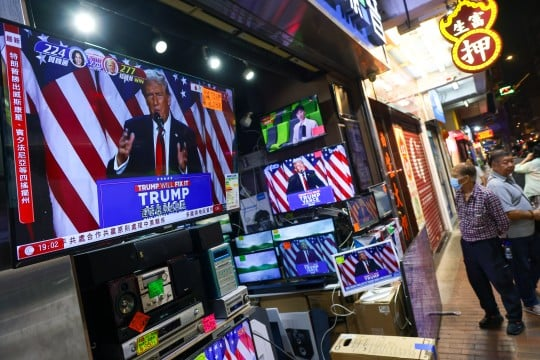
Chamber chairwoman Agnes Chan Sui-kuen said: “Companies are definitely more optimistic than last year, when [US] President [Donald] Trump was threatening to raise tariffs, which created a lot of uncertainties for businesses.”
The chamber conducted its annual poll between October 30 and November 12, receiving 236 valid responses from a mix of companies, 53.4 per cent of which were small and medium-sized enterprises.
Chan noted that the geopolitical environment had become more stable.
“This year’s survey might also have been influenced by the US and China agreeing to a tariff truce and peace talks between Israel and Palestine,” Chan said.
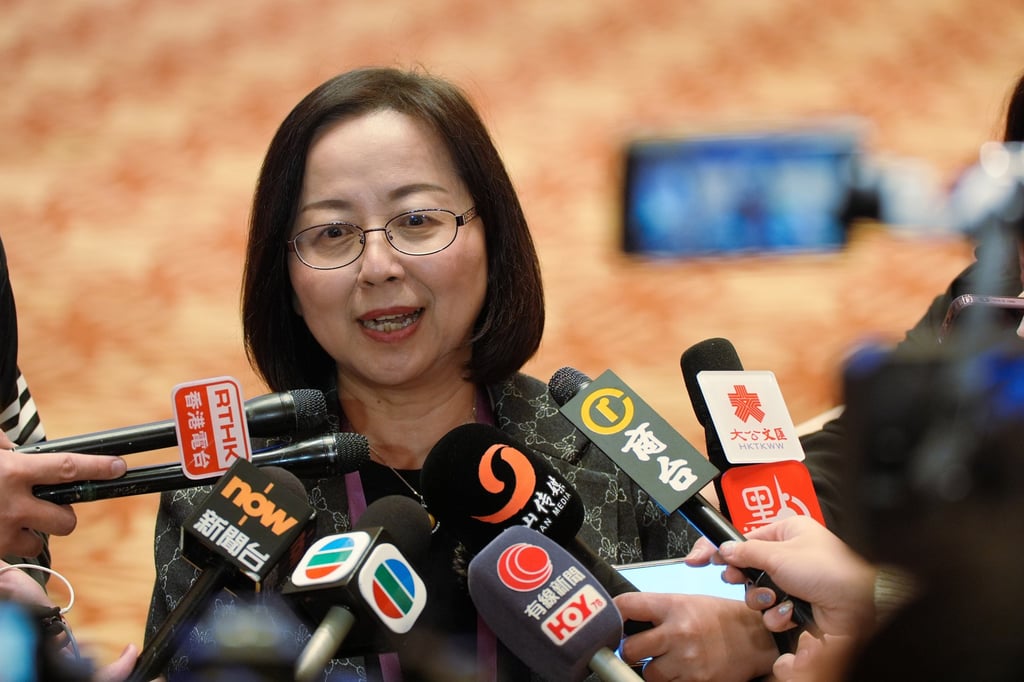
However, she warned that businesses still faced significant headwinds that required strategic adjustments.
“Sluggish global economic growth and geopolitical headwinds remain the key challenges for businesses in Hong Kong,” Chan said. “To offset this, companies are exploring new opportunities and diversifying their markets.”
The chamber forecast that growth in merchandise exports would slow to 3 per cent, compared with a 14.3 per cent increase this year.
The outlook released on Thursday came after the US Federal Reserve cut its benchmark interest rate by a quarter of a percentage point to a range of 3.5 per cent to 3.75 per cent.
While the Hong Kong Monetary Authority followed suit, the city’s three note-issuing banks kept their prime lending rates unchanged, maintaining high borrowing costs for local businesses.
Meanwhile, the Trade Development Council said Hong Kong’s exports were expected to grow by between 8 and 9 per cent in 2026, driven by demand for artificial intelligence products.
“While 2025 proved to be a year of heightened uncertainty, 2026 should be a year of greater clarity on global trade,” said Irina Fan, the council’s director of research.
“US tariffs are no longer among Hong Kong exporters’ three biggest 2026 concerns.”
Fan said business leaders were considering various strategies, including producing goods in China for selling to the Chinese market and US-made products for the American market.
Some companies were even exploring a “world minus one” approach – excluding the US market – to optimise their US and non-US business portfolio, she added.
Kenneth Lee, head of the council’s special project and business advisory section, said that when it came to expansion plans over the next two-year period, Asia remained very much the focus.
For 42 per cent of respondents for the council’s fourth-quarter export confidence index, mainland China was the highest priority market, followed by the rest of Asia at 30.3 per cent and the Asean bloc at 18.9 per cent, Lee said.
The council’s index was based on a survey conducted between October 17 and November 7, covering exporters from six key sectors, including electronics, clothing and jewellery.
About the Author