
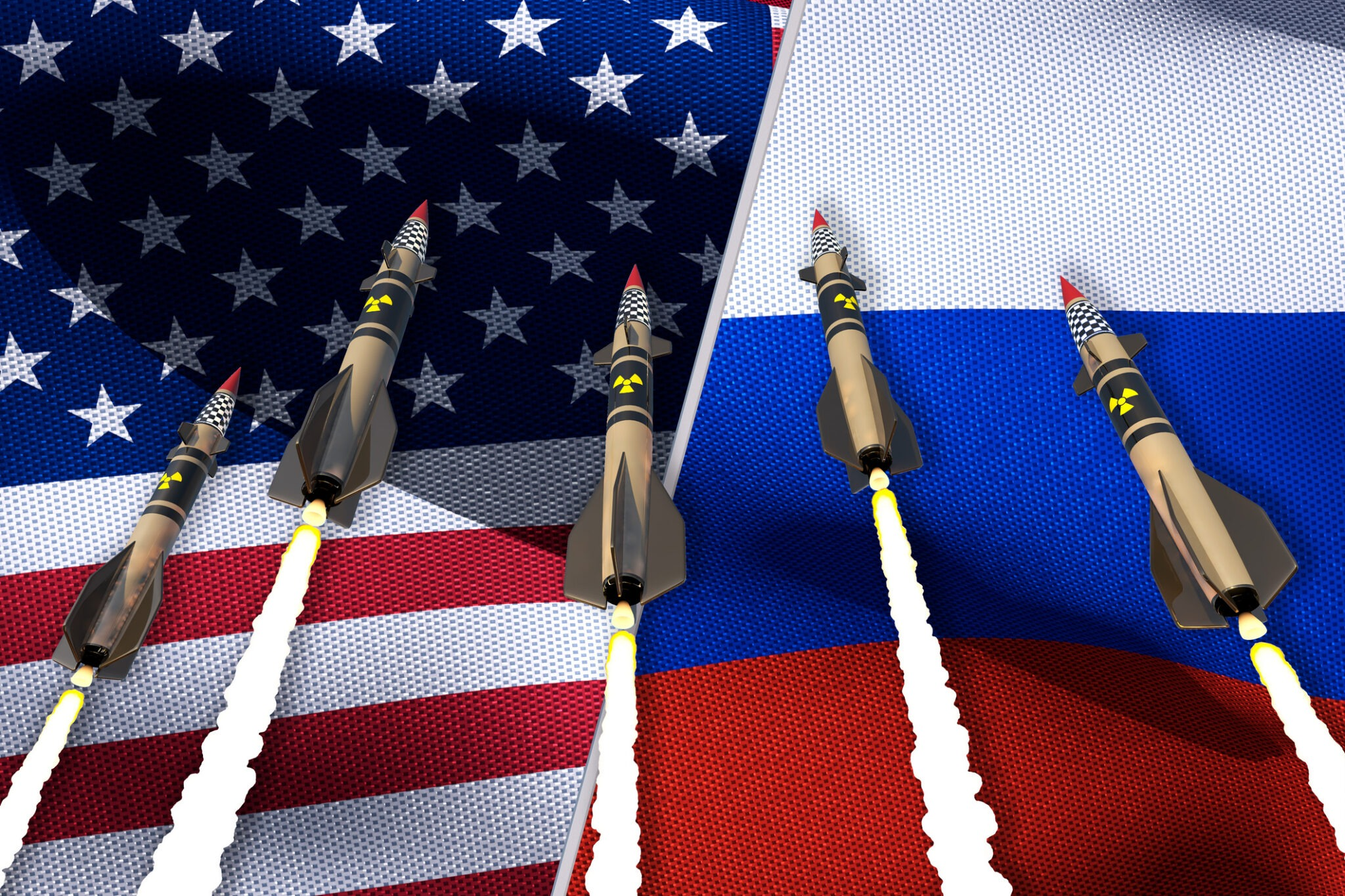
The New START treaty between the United States and Russia expires on 5 February, leaving no binding arms control agreement or guardrails between the two countries. For the past 15 years, the treaty has limited the number of deployed strategic nuclear warheads and ensured the two countries maintained regular communication about those deployments.
ASPI staff offer their views on the significance of the expiration.
Courtney Stewart, deputy director, Defence Strategy program
The New START Treaty was the highest profile element of US president Barack Obama’s nuclear security agenda and has been the last remaining bilateral constraint on US and Russian strategic nuclear weapons. Its expiration will mark the loss of a framework that shaped how nuclear deterrence was understood, debated and legitimised.
New START’s most enduring contribution was not just numerical reductions but unprecedented transparency. Until 2010, the number of operationally deployed strategic warheads was classified. Making it public enabled a serious discussion about how many nuclear weapons were required for deterrence and why.
That transparency mattered. New START proved that a relatively small and credible nuclear deterrent was adequate. The expiration requires a new debate on the rationale for warhead numbers. That should in turn drive public discussion on the difference between targeting for counterforce (targeting of an adversary’s nuclear weapons) and countervalue (retaliation against what an adversary values most). If the US and Russia are driven by counterforce targeting, a renewed arms race may be on the horizon as they seek more offensive weapons to preserve a credible strike capability.
However, deterrence does not demand nuclear parity. A nuclear arsenal capable of limited counterforce options but ultimately anchored in a credible countervalue threat could deter and help prevent a nuclear arms race. More serious debate is needed. And the US’s allies should not remain silent, as extended nuclear deterrence remains a core rationale of the US’s nuclear weapons policy.
Rajeswari Pillai Rajagopalan, resident senior fellow
The end of the New START treaty bodes well for neither international arms control nor global stability. The treaty, which followed the SALT agreements and the original START agreement, has been one of the few remaining arms-control treaties.
At the bilateral level, the US and the Soviet Union’s 1972 Anti-Ballistic Missile (ABM) treaty expired upon US withdrawal in 2002, and we have subsequently seen significant research and development in missile defences. More recently, the Intermediate-range Nuclear Forces (INF) treaty expired after first US withdrawal in 2019, followed by Russian withdrawal in 2025.
The US had good reasons for displeasure with both treaties. On missile defences, the US was worried about the growing threat of missile proliferation from countries such as Iran and North Korea. It therefore decided it would rather give up on the bilateral ABM treaty than limit its capacity to defend itself against rogue actors. Similarly, the INF treaty constrained the US while China expanded intermediate range rocket forces without restraint. Indeed, China rejected efforts to bring it into the INF treaty. New START might be following a similar path as China is rapidly expanding its nuclear forces with little justification or explanation, and it refuses to accept any limits on its nuclear expansion.
At the multilateral level, there have been no successful negotiations at the Conference on Disarmament since 1996. With START’s expiration, almost all current strategic arms-control negotiations and treaties will be gone. Lacking any restraining frameworks, this could very well be the beginning of a new, much more dangerous, three-horse nuclear arms race.
Malcolm Davis, senior analyst
The collapse of New START could see a nuclear breakout given the extensive reserves of warheads and the potential to rapidly fit several on each intercontinental ballistic missile, an action that the treaty has constrained.
In 2025 the United States had a reserve of 1,930 warheads. In comparison, Russia had 2,591 warheads in reserve, of which 1,114 were strategic and 1,477 non-strategic. Russia’s large reserve of tactical nuclear warheads could be deployed rapidly.
Russia could also increase deployment of non-traditional delivery systems, such as the Avangard and Oreshnik hypersonic weapons. There will be greater effort to perfect a fractional orbital bombardment system based on the testing of the RS-28 Sarmat missile, which continues to move from failure to failure. With the end of New START, Moscow’s responses could include deploying more Poseidon nuclear-armed uncrewed submarines and beginning deployment of Burevestnik nuclear-powered cruise missiles or nuclear anti-satellite capabilities.
A return to a US–Russia nuclear arms race could see Beijing accelerate and broaden current efforts to expand its nuclear forces. Moscow and Washington would then need to respond. A three-way nuclear arms race would be inherently destabilising, especially in the absence of monitoring and verification measures.
Alex Bristow, senior analyst
The lapsing of New START is an opportunity to address China’s rapidly expanding nuclear arsenal and its superiority in theatre-range missiles. Despite Beijing’s stated ‘no first use’ policy, it seems bent on building an advantage in regional nuclear forces that it could exploit for coercion or limited nuclear warfighting.
The growing Chinese nuclear threat influenced President Donald Trump’s withdrawal from the INF treaty in his first term. He has been reticent to extend New START while Beijing remains outside the arrangement.
Rather than engaging in arms-control negotiations or risk-reduction measures, Beijing has pushed for multilateral no-first-use declarations that would undermine US security assurances to its allies. Japan is among those opposed because it fears China outmatching it conventionally.
Beijing’s eschewal of arms control matters for Australia. In a conflict, China could use its tactical nuclear forces to target military units and infrastructure across the region, including in and around Australia, while China and the US avoid strategic strikes against each other’s homelands.
Trump has supported new nuclear investments to counter China’s regional advantages, including developing a nuclear cruise missile that is likely to be carried on US submarines operating from Australian ports next decade. Australia could help by saying and doing more to support the US nuclear umbrella, as Japan is.
Faced with collective resolve by the US and its allies, Beijing may be persuaded to begin arms-control negotiations rather than continuing to arms race.
Linus Cohen, researcher
New START’s transparency mechanism ceased to function in 2023. The demise of its binding numeric limits is probably less important. Russia and the US have heavily invested in decades-long modernisation programs that prioritised quality over quantity, meaning New START’s force size limits have been less constraining than they appear. Replacing Cold War systems is already expensive and difficult, and a buildout at a pace equal to China’s (let alone to reach Cold War levels) would be far more so.
Both countries appear relatively content with their current force size, and this may in part explain Russian President Vladimir Putin’s willingness to offer an informal one-year extension to the numeric limits, but without restoring the transparency mechanism. The offer was mostly political theatre: without the mutual inspection rights and regular detailed communications on force posture, the restrictions are worth little.
Nevertheless, limits are important signals for decisionmakers. If either country appears to shift warheads out of storage and deploy them persistently above the New START limit, the other will probably follow. But that’s just the point: US officials estimate that Russian deployments may have exceeded the limit for part of 2024. Without regular on-the-ground inspections, it’s extremely hard even for a sophisticated intelligence apparatus to verify deployed warhead counts. Trust is now in very short supply. The danger is that Russia or the US—or both—decide that restoring it is harder than winning an arms race.
About the Author