
The Pacific Multi-Domain Training and Experimentation Capability (PMTEC), a program of the United States Indo-Pacific Command, is introducing warfighters to a new kind of battle buddy: artificial intelligence (AI). As part of its mission to implement rapidly advancing technologies, PMTEC is spearheading AI integration in military operations, familiarizing troops with tools to gain decision dominance, enhance situational awareness and maintain strategic advantage.
During recent joint exercises, PMTEC showcased how AI-enabled systems can optimize information flow, boost planning and streamline operations. The tools provide real-time insight into operational scenarios, allowing commanders to make faster and better-informed decisions.
Integrating AI into the common operational picture (COP) was a highlight of many exercises. The COP, a unified display of operational information, was enhanced by AI tools that process and analyze data to provide actionable intelligence for joint all-domain operations. This allows warfighters to adapt to dynamic scenarios.
“Facilitating integration of AI tools for the staff to rehearse current and future capabilities is necessary to maintain global joint force posture and decision dominance,” said Mary Ann Swendsen, a PMTEC experimentation integrator.
A significant advantage of PMTEC’s AI experimentation is its accessibility. Many of the AI-enabled systems have low learning curves, enabling quick adoption by U.S., ally and partner forces and command staff. This accelerated operational tempo during exercises and demonstrated AI’s value as a force multiplier for information gathering, analysis and dissemination.
Allies and Partners observed the benefits of AI integration, particularly in enhancing interoperability, data sharing and coordination of multidomain activities.
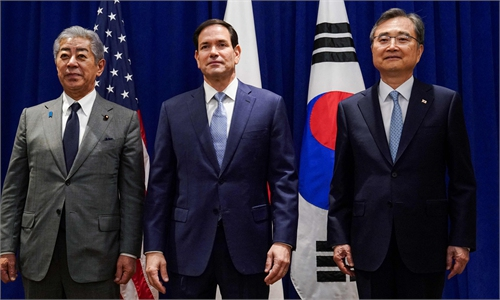
PMTEC’s focus on multidomain integration has further amplified AI’s impact in warfare. Exercises such as Freedom Edge, conducted by Japan, the Republic of Korea and the U.S. in September 2025, demonstrate how AI tools can link simulation systems across geographic locations, enabling seamless data exchange and creating a realistic training environment. This approach challenges warfighters to adapt to complex scenarios and operate cohesively across land, sea, air, space and cyber domains.
The use of AI in synthetic training environments allows participants to rehearse concepts, identify vulnerabilities and refine tactics in real-time. These capabilities are critical for maintaining readiness and ensuring that warfighters can respond effectively to emerging threats.
PMTEC’s contributions to the Guam Defense System (GDS), a cornerstone of U.S. defense strategy in the Indo-Pacific, highlight the synergy between AI and integrated defense systems. During the multinational Resolute Force Pacific (REFORPAC) exercise in mid-2025, PMTEC leveraged AI tools to analyze data and provide actionable insights, enabling warfighters to respond more effectively to complicated threat scenarios. REFORPAC, which involved thousands of personnel conducting drills at forward-operating bases in the U.S. territory of Guam, Hawaii and Japan, validated the live, virtual and constructive simulation capability, which integrates AI to enhance training realism.
Incorporating emerging technologies to increase capabilities with lethal effects ensures that the GDS remains adaptive and scalable. This aligns with the U.S. Pacific Deterrence Initiative and National Defense Strategy, ensuring the nation’s forces are prepared to counter evolving threats and maintain a credible deterrence posture.
Collaborative Innovation
PMTEC’s AI experimentation is supported through collaboration with the U.S. Department of War’s Defense Innovation Unit and the Pacific Impact Zone, a Hawaii-based defense innovation hub. The partnerships have been instrumental in developing the Regional Joint Training Infrastructure (RJTI), which integrates operational, training and test environments across the Indo-Pacific. RJTI facilitates secure data sharing and peer networks to enable integration with allied and partner forces.
PMTEC’s integration of AI into the RJTI creates a dynamic, multidomain training ecosystem designed to mirror the complexity of future conflict environments. This advanced simulation capability equips warfighters with the tools and technologies needed to sharpen decision-making and sustain a strategic edge across operations.
From optimizing information flow during command post exercises to refining integrated air and missile defense capabilities through the GDS, PMTEC is demonstrating how AI can empower warfighters to outmaneuver adversaries and maintain decision dominance.
As the Indo-Pacific continues to face complex and unconventional threats, PMTEC’s AI initiatives are reshaping military operations with a focus on operational relevance and maintaining warfighter superiority.
“PMTEC is redefining what it means to have a battle buddy in the modern battlespace,” Swendsen said. “By pioneering the integration of artificial intelligence into military operations, PMTEC is equipping warfighters with a powerful ally that enhances their ability to adapt, decide and act with precision.”
The Pacific Multi-Domain Training and Experimentation Capability is funded and resourced by the United States Indo-Pacific Command to enhance joint, combined and coalition warfighting readiness, posture and lethality. It is a key component of the Pacific Deterrence Initiative, reinforcing the U.S. commitment to homeland defense and a free, secure and prosperous Indo-Pacific. PMTEC’s integration of advanced training technologies and its alignment with U.S. National Security Strategy make it a cornerstone of U.S. efforts to maintain regional stability and counter adversarial aggression.
About the Author