
In the South China Sea, Chinese aggression rubs up against complex intraregional politics. This selection of Strategist articles explains China’s aggressive and coercive behaviour in the South China Sea and analyses Southeast Asian states’ responses to that behaviour.
China’s behaviour in the South China Sea aims to create a region where Southeast Asian states defer to its interests, writes Euan Graham.
As Southeast Asian states shy away from the reality of China’s domination game, they weaken their collective resolve and allow China to shape the region to suit itself.
China’s quest for dominance in the South China Sea is not about resources nor any single maritime issue; in essence, it isn’t about the sea at all. Beijing’s geopolitical aim is to condition Southeast Asian states, individually and collectively, into accepting subordinate status. If it can achieve this without fighting, the likelihood is that the South China Sea will remain tense but stay below the threshold of armed conflict.
China’s aggression is encouraging Southeast Asian states to cooperate with each other, writes Ridvan Kilic.
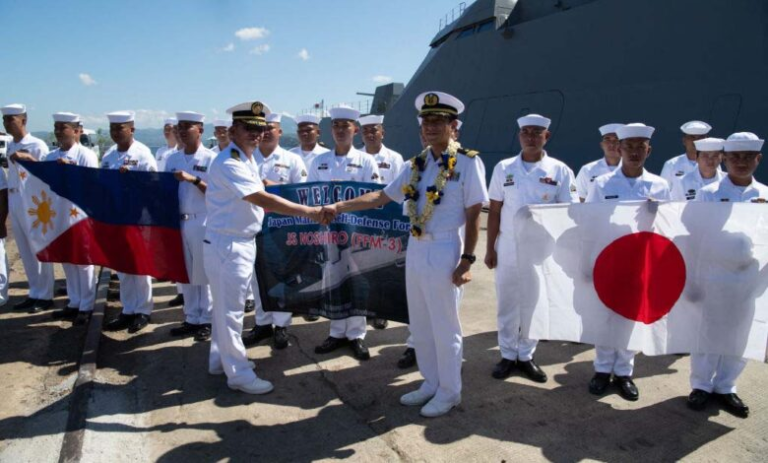
While some Southeast Asian states acknowledge the security threat posed by China, cooperation remains mostly bilateral, rather than broader coalition-building by the affected states.
Southeast Asia’s three most populous countries are tightening their security relationships, evidently in response to China’s aggression in the South China Sea. This is most obvious in increased cooperation between the coast guards of the three countries—Indonesia, the Philippines and Vietnam.
Indonesia won’t copy the Philippines’ transparency initiative as it risks jeopardising economic ties with China, writes Aristyo Darmawan.
The Philippines’ transparency initiative has shone a light on the extent of Chinese aggression, but differing security and economic relationships with both the United States and China make it unlikely that Indonesia, or others, will embrace transparency as the antidote to Chinese aggression.
Yet transparency initiatives may not always be a policy choice for other Southeast Asian countries, such as Indonesia. One of the main reasons behind this was that they often don’t want to risk their economic ties with China by implementing a policy that publicly names and shames Beijing.
Indonesia’s geography gives it more bargain power with China than many assume, write Alfin Febrian Basundoro and Trystanto Sanjaya.
China and Indonesia rely on each other in different ways, and Indonesia’s control of vital shipping lanes is an underestimated asset given the importance of those lanes to China’s trade and prosperity.
If the United States blockaded China in response to an invasion of Taiwan, for example, continued access through the Malacca Strait and Indonesia’s archipelagic waters would be vital to the Chinese economy. To maintain this access, Beijing must preserve Jakarta’s goodwill.
Indonesia’s agreement to greater security cooperation with the US shifts its position in the South China Sea, write Aristyo Darmawan and Abdul Rahman Yaacob.
In negotiating relief from US tariffs, Indonesia plays a difficult game balancing economic and security ties with both the US and China, complicating the country’s stance on the maritime dispute and regional mediation efforts.
Indonesian agreement to increased maritime security cooperation with the US would alarm China, which has long sought to exclude extra-regional powers from South China Sea disputes. Joint Indonesia-US activity in the South China Sea might further delay protracted attempts at negotiating a code of conduct to regulate activities in the disputed area between China and the Association of Southeast Asian Nations.
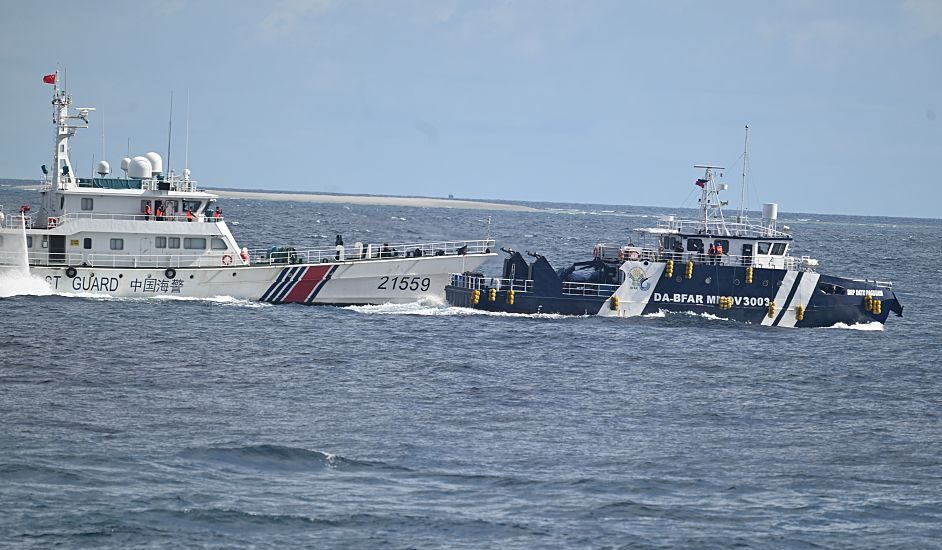
Incidents in the South China Sea demonstrate Beijing’s high-stakes games and tendency for escalation, writes Ray Powell.
A collision between two Chinese vessels in the South China Sea in August 2025 highlighted China’s recklessness and the very real risks of dangerous escalation—a burden particularly carried by the Philippines.
This was a reflection of Beijing’s growing maritime militancy. The behaviour of the Chinese destroyer, in particular, illustrates this fact. Not only did its captain, likely advised by the ship’s political officer, feel duty-bound to become directly involved in a law enforcement matter; he further continued the aggressive pursuit after the collision.
About the Author