
The United States has taken another important step toward strengthening deterrence in the strategically vital Arctic region.
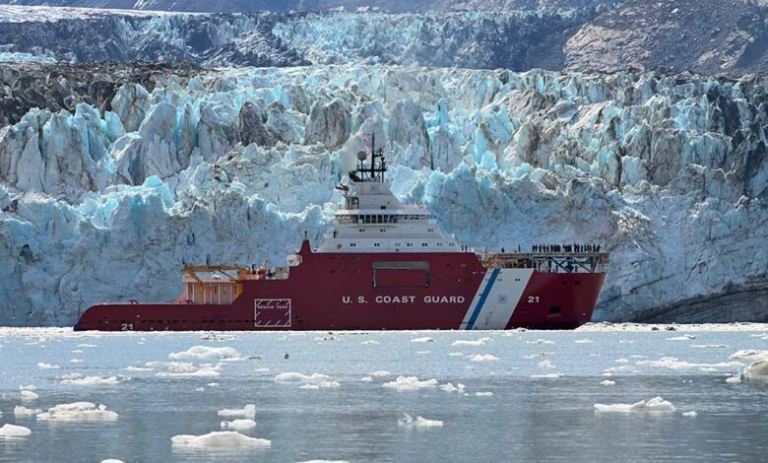
The U.S. Coast Guard in January 2026 awarded contracts to domestic and foreign shipbuilders for up to six medium icebreakers called Arctic Security Cutters (ASC). The contracts with Bollinger Shipyards in the U.S. state of Louisiana and Rauma Marine Constructions of Finland come as production of the first of the service’s new large icebreakers, called Polar Security Cutters (PSC), is underway. The PSCs, unlike the ASCs, are designed for Arctic and Antarctic operations.
“These awards represent decisive action to guarantee American security in the Arctic,” Adm. Kevin Lunday, the U.S. Coast Guard’s recently confirmed commandant, said in a news release. “The Arctic Security Cutters will deliver the essential capability to uphold U.S. sovereignty against adversaries’ aggressive economic and military actions in the Arctic. These cutters will ensure the Coast Guard’s ability to control, secure and defend our northern border and maritime approaches — without question.”
The U.S. Coast Guard’s ability to carry out that mission has grown more challenging. China and Russia are rapidly increasing their maritime activity in the region, where melting sea ice is opening new shipping lanes and access to vast undersea deposits of minerals, oil and natural gas. The U.S. Navy deploys submarines under the Arctic ice but doesn’t operate icebreakers, which is the Coast Guard’s mission.
“With lines being drawn and a lot of different contested land claims, it’s — I wouldn’t say the wild, wild West, but maybe the wild, wild North,” U.S. Coast Guard Capt. Jeff Rasnake, commanding officer of the heavy icebreaker Polar Star, told the Alaska Beacon newspaper in November 2025.
In addition to the Polar Star, the U.S.’s open-ocean icebreaking fleet includes the medium vessels Healy and the recently commissioned Storis. Nearly $9 billion in federal spending was designated in 2025 for Coast Guard cutters, including medium and heavy icebreakers.
The contract with Rauma includes building up to two ASCs in Finland, with delivery of the first expected in 2028. The contract with Bollinger includes up to four ASCs to be built in the U.S., with delivery of the first cutter expected in 2029, according to the news release. The first PSC, to be called Polar Sentinel, is set for delivery in 2030.
The ASC project is the result of the Icebreaker Collaboration Effort Pact framework signed in 2024 by Canada, Finland and the U.S. to accelerate icebreaker construction. Together with the heavy icebreaker program, the ASC will provide the Coast Guard with an icebreaking fleet capable of year-round operations, according to a Bollinger news release.
Those operations are crucial as the Arctic becomes the focus of strategic competition.
“The ability to be present guarantees your ability to maintain sovereignty. And that’s what we’re trying to get at here in the Arctic,” Capt. Corey Kerns, commander of the Storis, told the Alaska Beacon. “We need more icebreakers to be present in our waters and be clear what is our waters.”
Sentry is a professional military magazine published by U.S. Strategic Command to provide a forum for national security personnel.
About the Author