
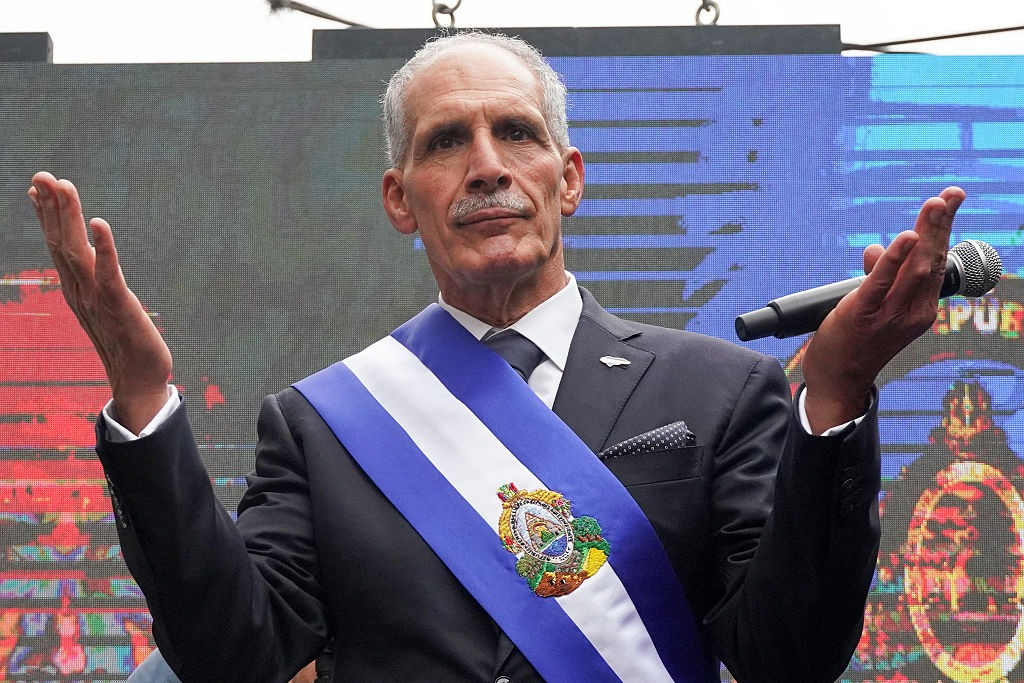
It turns out that China’s economic clout isn’t so strong. Since taking office on 27 January, Honduran President Nasry Asfura has signalled a reassessment of the country’s relationship with China, driven by immediate economic and political constraints.
In a nationally broadcast interview, Asfura linked the China-Taiwan question to Honduras’s exposure to US trade policy, migration, and employment tied to export manufacturing. His comments offered the clearest public indication to date of how the administration is weighing its external options following Honduras’s 2023 decision to recognise the government in Beijing.
China’s diplomatic engagement with Honduras was initially accompanied by expectations of expanded exports and deeper economic integration. Subsequent trade figures have indicated that the economic effects of the diplomatic shift have been asymmetrical. According to data from the Central Bank of Honduras, imports from China increased sharply, rising from approximately US$2.0 billion (about A$2.8 billion) in 2023 to US$2.6 billion (about A$3.7 billion) in 2025. Honduran exports to China also rose, but only by US$31.8 million (about A$44.9 million). The widening gap reinforced domestic concerns that the relationship has primarily benefited Chinese exporters rather than Honduras’s productive sectors.
At the same time, the rupture with Taiwan produced concentrated economic losses. Honduran exports to Taiwan fell to US$26.4 million (about A$37.3 million) through October 2025, a significant contraction for industries that had relied on preferential access. The shrimp sector was particularly exposed, given its prior dependence on a limited number of export destinations. The contraction ensured that the diplomatic decision remained visible in domestic political debate rather than fading as a purely symbolic shift.
During that period, Asfura indicated interest in recalibrating Honduras’s external relationships while preserving existing trade flows with China. Since taking office, his administration has begun reviewing agreements signed by its predecessor, many of which were concluded rapidly after the diplomatic switch.
Externally, China’s position has appeared unchanged. Beijing’s ambassador attended Asfura’s inauguration, and official statements reiterated cooperation under the One China principle. Within Honduras, the episode was largely interpreted as procedural. The transition period was not expected to produce an immediate diplomatic shift, and avoiding additional symbolism was seen as a way to maintain flexibility while institutional reviews continued, particularly following the departure of the previous administration’s ambassador to China shortly before the change of government.
In outlining the government’s decision-making environment, Asfura focused on factors linked to Honduras’s economic and social ties with the United States. These included the fact that roughly 55,000 Hondurans lived in the US under temporary protected status, and that more than 200,000 manufacturing jobs within Honduras are tied directly to exports to the US market.
Trade policy further shapes these considerations. Honduras currently faces a 10 percent US tariff on several exports, as well as a 25 percent tariff on auto parts, a sector integrated into regional supply chains. In mid-January, Asfura travelled to Washington to meet senior US officials. Discussions on potential tariff reductions were subsequently announced. Bilateral trade between Honduras and the US reached US$15.8 billion (about A$22.3 billion) in 2024, underscoring the scale of exposure involved.
At present, Honduras’s diplomatic position remains unsettled, with policy decisions continuing to be reviewed against trade performance, external exposure and domestic economic pressures. No final determination has been announced regarding China or Taiwan, but the administration’s approach to the diplomatic relations in Asia seems to be tied to economic realities rather than diplomatic symbolism.
About the Author