
Jordan on Monday became the latest Arab nation to proclaim that it won’t let its territory be used in a war against Iran. Last week, we noted that Saudi Arabia and the United Arab Emirates also told the White House that their bases and airspace will be off limits for any attack on Iran. These decisions, if they hold, could greatly affect how the U.S. conducts any offensive actions against Iran. Meanwhile, reports have emerged that the U.S. and Iran might hold talks in Turkey on Friday. More on that later in this story.
“I held a phone call with His Excellency the Iranian Foreign Minister, Dr. Abbas Araghchi, discussing the situation in the region and the efforts being made to de-escalate tensions,” Jordan’s Deputy Prime Minister and Foreign Minister Ayman Safadi explained on X. “I emphasized the necessity of adopting dialogue and diplomacy as the path to reaching a peaceful resolution for the nuclear issue and ending the tension. I also reaffirmed Jordan’s steadfast position on the necessity of respecting the sovereignty of states, and that Jordan will not be a battlefield for any party in any regional conflict, or a launchpad for any military action against Iran, and it will confront with all its capabilities any attempt to breach its airspace and threaten the safety of our citizens.”
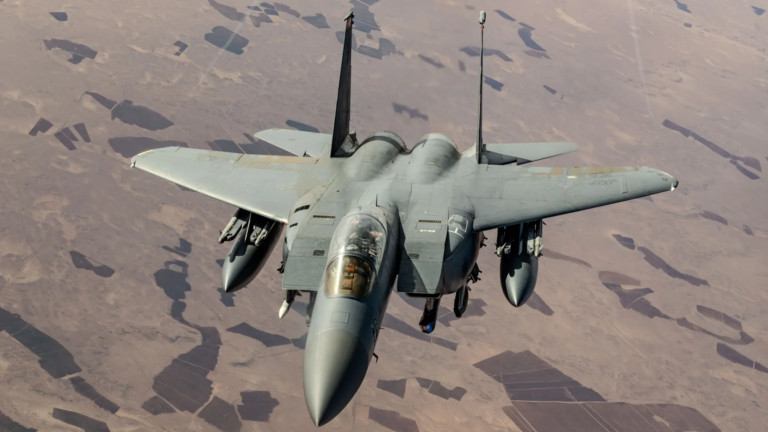
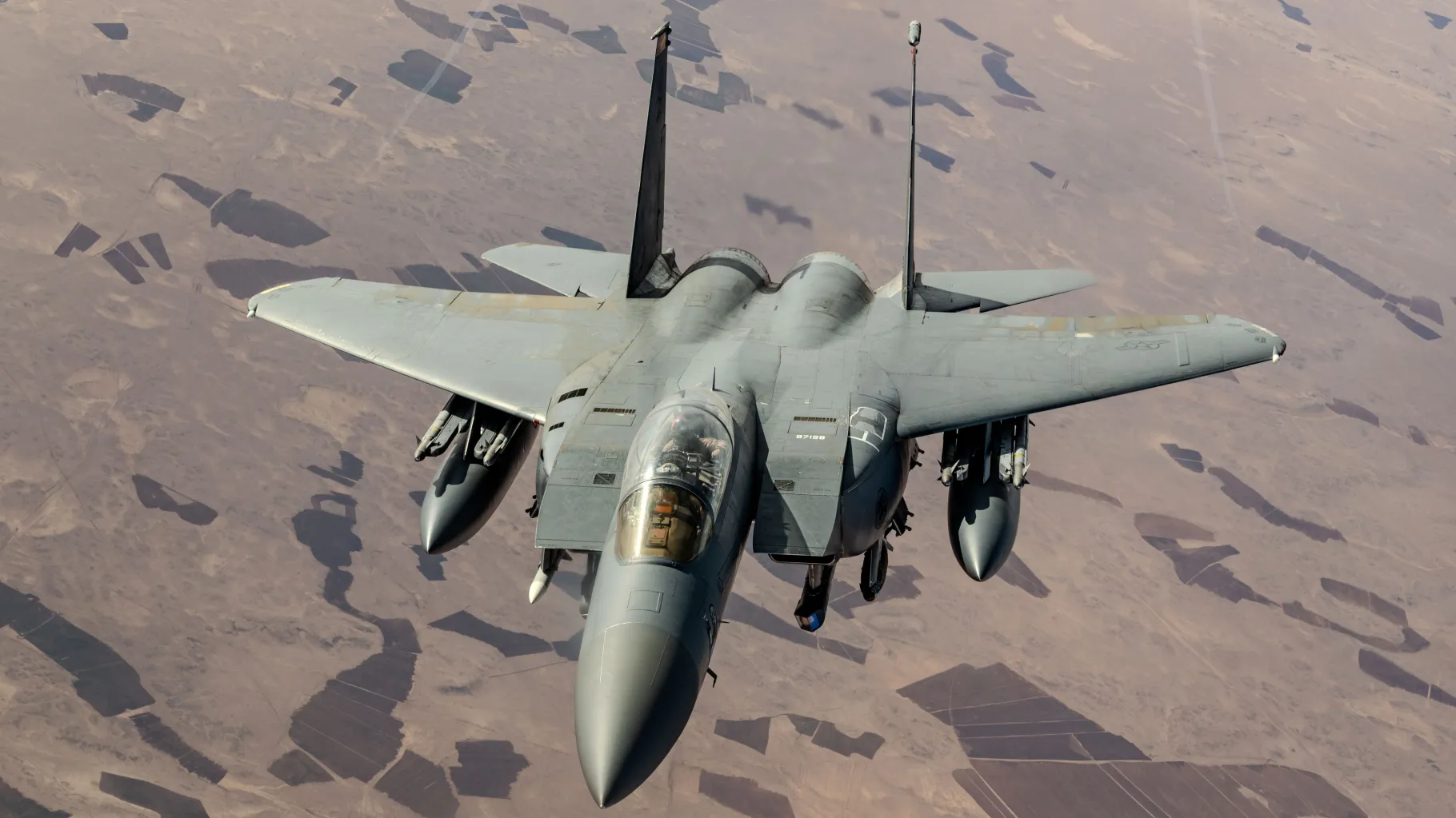
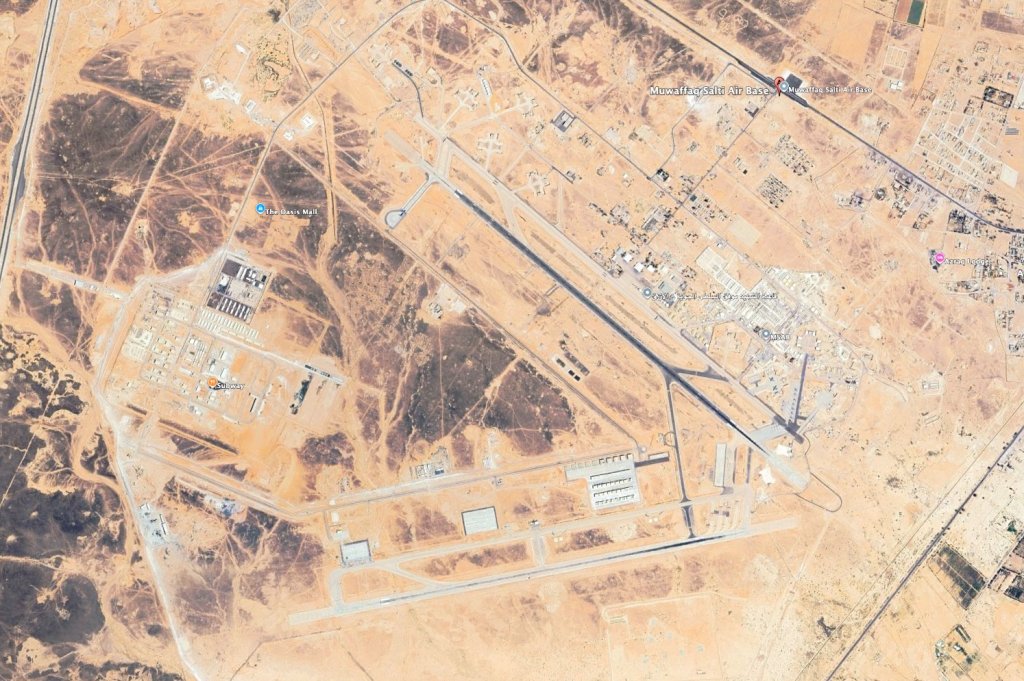
Such a move could further limit Trump’s military options in the region. Muwaffaq Salti, in central Jordan, has been a critical base housing U.S. tactical jets and other aviation assets for years. F-15E Strike Eagles based there played a key role in defending against a massive Iranian missile and drone barrage on Israel in April 2024. Over the past few weeks, Muwaffaq Salti has also seen an influx of at least 12 additional F-15E Strike Eagles and air defense systems amid mounting pressures with Iran. These join F-15Es already there, as well as A-10 Thunderbolt II close support jets and possibly American F-16 Vipers. Taking these assets out of the fight, or not allowing overflights by other aircraft, reduces the U.S. and allies’ ability to strike targets in Iran. It is unlikely to factor into the possibility of defending against the large number of missiles and drones Iran could fire in retaliation for any attack.
There is also the possibility that his statements are for consumption by a home audience wary of war with Iran, especially if that means fighting on the side of the Israelis. It’s also possible that messaging is intended to keep them from being struck by Iran in a massive retaliatory strike, but U.S. access to basing and airspace may be clandestinely allowed, even if to a limited degree. We just don’t know. Regardless, these are possibilities we suggested after Saudi Arabia and UAE made their comments about not getting involved.
As we predicted, a flight of six E/A-18 Growlers landed at the Jordanian base on Jan. 31. They arrived after a journey from Puerto Rico, where they had taken part in the operation to capture Venezuelan dictator Nicolas Maduro. You can read more about what the Growlers would bring to the table for any conflict with Iran here.
The U.S. is sending additional Patriot and Terminal High Altitude Area Defense (THAAD) systems to the Middle East for increased protection from any Iranian attack, The Wall Street Journal reported. Now the flight appears to be heading from Kadena Air Base in Japan, which has an air defense unit operating Patriots. Online flight trackers suggest that the cargo jets are moving some of that equipment to the Middle East.
U.S. air defenses are far more limited in capacity than many realize and we have seen these exact kinds of reshuffling of assets unfold prior to a crisis erupting multiple times before in the region. You can read more about the limited supply of Patriot and THAAD batteries in our past report here and what measures are being taken to at least begin to rectify this problem here. Just how much airlift work it is to move these batteries around is pretty daunting in itself.
There also appears to be a flight of six Vermont Air National Guard F-35A stealth fighters headed to the region. The jets moved east from the Caribbean, where they also took part in the Maduro capture. We were the first to report that they landed in Lajes, Portugal, and were possibly slated to head to Jordan. However, the F-35s were diverted to Rota, Spain, and it remains unclear when they will leave or where they will go.
Even if the F-35s are bound for the East, there still has not been the kind of influx of tactical aviation needed to sustain any operation of scale. There also doesn’t appear to be any immediate bolstering of aircraft at Diego Garcia, as we have seen in prior tensions with Iran and its Houthi proxies in Yemen.
Recent satellite imagery shows three Air Force KC-135 Stratotanker aerial refueling jets, a Navy P-8A Poseidon maritime patrol jet, and perhaps two Air Force Special Operations Command MC-130J Commando IIs. Satellite imagery from today shows many of these assets have moved on or were on missions away from the base, with just what appeared to be a pair of P-8s and a heavy airlifter, possibly a C-5, present. However, the buildup at the Indian Ocean island could accelerate at any time.
While Trump has shown a willingness to negotiate, it should be noted that the White House was in talks with Iran ahead of last June’s Operation Midnight Hammer attack on Iran’s nuclear weapons facilities. It remains to be seen whether a new round of face-to-face negotiations takes place, but the buildup for a potential conflict does not seem to be stopping.
About the Author