





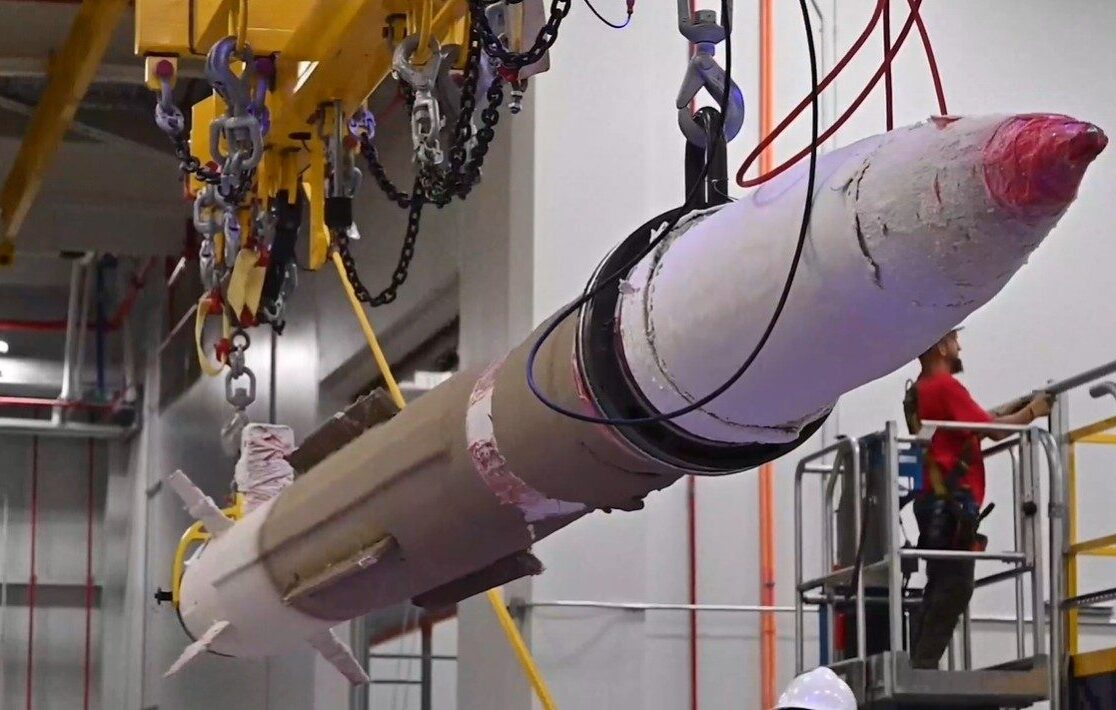
The US commitment to Indo-Pacific stability is being tested not by strategic ambiguity but by industrial reality. Secretary of Defense Pete Hegseth’s recent notification to Japanese Defense Minister Shinjiro Koizumi that deliveries of US-made Tomahawk cruise missiles would be delayed – maybe by two years – exposed a critical vulnerability in America’s deterrence architecture in the region. Japan had contracted to acquire up to 400 Tomahawks between fiscal 2025 and 2027. Those deliveries are now in doubt because the US military itself is short of missiles.
The reason is straightforward, if uncomfortable: the United States has systematically neglected its munitions industrial base for more than two decades, and that neglect is now creating strategic shortfalls that directly undermine allied security in the Indo-Pacific.
The stockpile crisis
In April 2024, a Center for Strategic and International Studies (CSIS) report estimated that the US military had fired more than 1,000 Tomahawks – roughly 30 percent of its entire operational stockpile of approximately 3,100 – during recent operations against Iran. The mathematics are stark: deplete one-third of your inventory in a single theatre, and you have less than two-thirds available for all other global contingencies, including the Indo-Pacific.
This is not a new problem. It is the culmination of a pattern established decades ago. As I have written elsewhere, when I served as a professional staff member on the US House Armed Services Committee in 2007 working missile defence issues, it was clear that interceptor inventories were already falling short of operational needs. A Joint Capabilities Mix study conducted at that time concluded that the United States needed roughly twice as many SM-3 and Thaad interceptors just to meet minimum requirements identified by regional combatant commanders. Congress acknowledged the problem – then set it aside.
Nearly two decades later, the gap has not been closed. It has grown.
The deterrence cost
The strategic implications are immediate and tangible. When the United States fires missiles in one theatre, it creates delivery shortfalls for critical allies in another. Japan is not a peripheral partner in this calculation. It is the cornerstone of US deterrence architecture in the Indo-Pacific. Delays in Tomahawk deliveries to allies are not an administrative inconvenience or a procurement problem to be managed through bureaucratic channels. They are a deterrence problem – one that directly affects the credibility of US commitments to regional allies and the stability of the strategic balance in Asia.
The problem compounds when viewed against the broader regional military equation. As the Pentagon has reported, China maintains significant quantitative advantages in cruise and ballistic missile inventories in the Indo-Pacific, and those capabilities are continuing to expand. The US and its allies have relied on qualitative superiority and advanced defensive systems to offset that advantage. But qualitative superiority means little if the missiles that embody it are not available for deployment or sale to allies.
The Typhon deployment and strategic signalling
Against this backdrop, the US decision to deploy Typhon mid-range missile systems to Japan takes on particular strategic significance. The Typhon is a land-based launcher for SM-6 and Tomahawk missiles. The US has already deployed the system in the Philippines and is now moving forward in Japan. (The Trump administration cancelled an earlier planned deployment to Germany.)
Beijing’s response to the Japan deployment was immediate and predictable. Chinese Foreign Ministry spokesperson Guo Jiakun urged Japan to ‘take a hard look at its history of aggression’ and ‘act prudently in military and security areas’ – the standard mix of historical grievance and thinly veiled intimidation that China deploys whenever US allies make decisions Beijing dislikes. It is the same argument China used in 2015–16 when the US deployed Thaad to South Korea.
The Chinese protests, however strident, are instructive. They reveal Beijing’s strategic concern: the Typhon deployment materially changes the military balance in a way that Beijing finds disadvantageous.
Deterrence and arms-control logic
The deployment of cruise missiles in the Indo-Pacific – sea-, air- and land-based – is essential for enhancing deterrence in a region where China likely holds a significant quantitative advantage in cruise and ballistic missiles. Matching that capability is not provocation. It is prudent strategy grounded in regional military reality.
There is also a longer-term arms control logic at work. As I have noted elsewhere, history suggests that China may be most willing to come to the negotiating table only when faced with deployments by others that impose tangible strategic and economic costs. This was the model that ultimately led to the INF Treaty during the Cold War: NATO deployed intermediate-range missiles in response to Soviet deployments, raising the cost of the status quo and creating incentives for negotiated limitation.
The same dynamic may apply in Asia. China will not come to the arms control table to advance a disarmament agenda. It will come when the cost of staying away becomes too high. The Typhon deployment in Japan is a step in that direction. It is not the endpoint of strategy; it is an opening move in a longer negotiating sequence.
The industrial-base challenge
Yet none of this strategic logic resolves the underlying problem: the US munitions industrial base remains inadequate to meet current operational demands and support credible ally commitments simultaneously. Deputy Secretary of Defense Stephen Feinberg and the Pentagon are working seriously to address this gap. But the hard question remains: can the US move fast enough? And can it sustain the investment over the long term rather than repeating the same cycle of acknowledgment followed by inaction?
The two-year delay in Tomahawk deliveries to Japan suggests the answer is not yet clear. We have acknowledged the problem for nearly two decades. We have set it aside repeatedly. We have run out of runway for that pattern.
The Indo-Pacific deterrence architecture depends not only on strategic clarity and allied commitment but on the material capacity to back those commitments with deliverable capability. Until the US fixes its munitions industrial base – and works with allies to expand co-production capabilities – that capacity will remain constrained, and regional allies will bear the cost of that constraint.