
Taiwan isn’t Ukraine. Russia’s victim has withstood almost four years of war, but it has advantages in perseverance that Taiwan lacks.
Taiwan needs its own ways of holding out against China, particularly against a Chinese blockade. Addressing this issue is becoming urgent as President Donald Trump shows an alarming lack of enthusiasm for preserving the island’s independence.
Among Taiwan’s priorities are stocking supplies and preparing its people psychologically for hardship.
To understand Taiwan’s challenges, first consider the differences between its circumstances and Ukraine’s.
Ukraine has borders with seven other countries, through some of which it can get overland supply. But Taiwan is an island.
Ukraine has an area of 600,000 square kilometres; in combat, it can trade space for time. Taiwan’s is just 36,000 square kilometres; it has little space to trade.
Ukraine grew more than enough of its own food before the Russian invasion. Even in peacetime, Taiwan needs imports.
And Ukraine is receiving strong material support from the United States and European countries to the west. But Trump told The New York Times on 8 January that what China did with Taiwan was ‘up to’ President Xi Jinping, though he added that he’d be ‘very unhappy’ with a change in the status quo.
Taiwan should be prepared to fight alone or with only limited help from Japan and Australia and possibly the Philippines.
Even if Taiwan can defeat an immediate amphibious assault, an island that cannot quickly produce large quantities of munitions and, most importantly, cannot feed itself or independently power its electricity grid is at the mercy of a rapidly ticking clock. It could lose its independence as Chinese forces blockaded it by sea and air, slowly but inexorably starving it of ammunition, food, fuel and willpower.
The longer it can hold out, the greater its chances of eventually getting help from external forces, maybe including a US showing renewed interest. A Chinese attack on Taiwan would have immediate and horrific consequences for countless Taiwanese, but it might take time for the scale and severity of those consequences to register around the world.
To improve Taiwan’s chances, the government of President Lai Ching-te should prioritise:
—Doubling down on efforts to stock ammunition, food, fuel, spare parts for the power grid, and supplies for other essential services, all while building up domestic production capacity to reduce dependence on imports;
—Reversing a policy to phase out nuclear electricity generation and instead expand nuclear power while decentralising the grid with even more sources of renewable generation;
—Crafting a strategy for widespread blockade running; and
—Commencing a publicity campaign to steel everyday Taiwanese against the hardships that a Chinese blockade would bring.
None of these efforts will be easy or cheap, as I’ll detail in later articles in this series. But all are probably needed for Taiwan’s survival in a largely solo defensive campaign. And no, there’s no real-world example to show the Taiwanese the way forward. With all due respect to the Ukrainian people, their own war effort is so much easier than what the Taiwanese would have to achieve if they mostly fought alone.
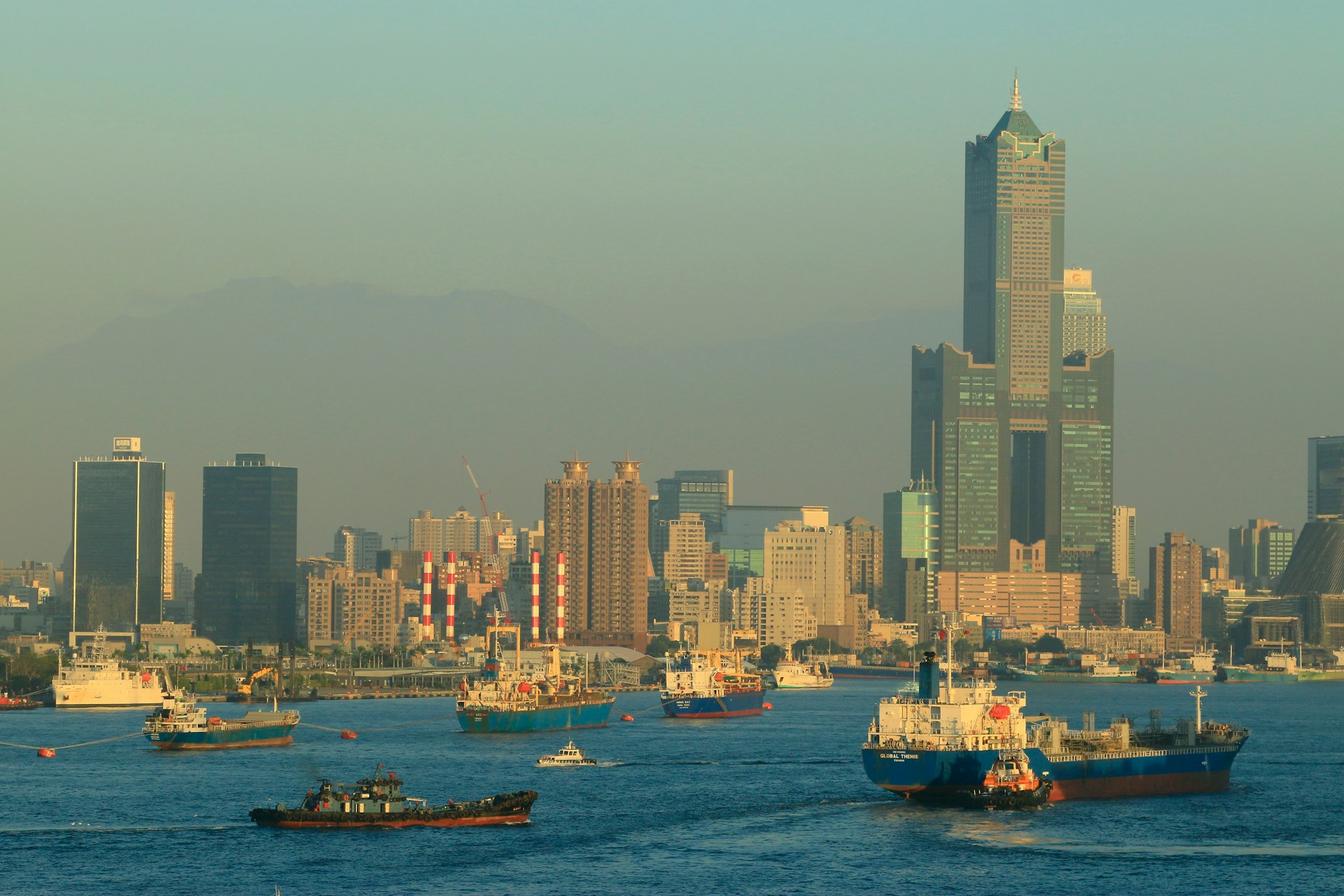
Shared land borders with allies alone greatly improve Ukraine’s chances, whereas Taiwan’s utter reliance on sea trade may be one of its greatest vulnerabilities. Indeed, Beijing may well forgo trying a risky amphibious assault and instead simply blockade the island to force it to submit.
To understand how a Chinese blockade might play out, the Center for Strategic and International Studies in Washington last year ran a series of realistic war games. In some scenarios, Chinese forces interdicted ships sailing towards Taiwan but didn’t sink them—skirting the threshold of violence that might compel Taiwan’s allies, in particular the US and Japan, to intervene.
In those scenarios, Chinese sailors seized more than 400 Taiwan-bound merchant ships—and Taiwan began running out of food in two weeks and natural gas in 10 weeks. On the brink of collapse, ‘Taiwan would have to either make concessions to China sufficient to get China to cease its [merchant-ship] boarding campaign, escalate by using military force against Chinese forces in the exclusion zone or get the United States to intervene on its behalf,’ the think tank concluded.
Stocking and aggressive blockade running could delay the collapse. But another issue is that the will of the Taiwanese people must last at least as long as their inventories of supplies.
History has proved that a resilient population can endure a long siege, albeit at great cost. But that resilience isn’t automatic.
When Nazi Germany tried to bomb Britain into submission in 1940, the ‘defeatist message fell on deaf ears’ among millions of everyday Britons, according to Tim Luckhurst of Durham University. Yet British pluck wasn’t the only reason. Government, business and media actively suppressed defeatist expression.
The good news for Taiwan is that ordinary Taiwanese may be just as deaf as wartime Britons to any assertion that defeat is inevitable. Recent polling indicates that two-thirds of Taiwanese would be willing to fight to defend their country. And the Ministry of National Defense (MND) in Taipei correctly sees this will to resist as a vital resource.
When the ministry released its annual national defence report in October, analysts were pleased with the report’s focus on the psychological aspect of national defence. The report ‘features an overarching emphasis on resistance,’ noted the Irregular Warfare Initiative, a Washington think tank. ‘Specifically, it describes how the MND is preparing Taiwan as a nation and the Taiwanese as a people to resist.’
Defiance can buy time. By holding out, Ukraine has been able to adapt and fight on amid evolving technology, changing Russian strategy and seismic shifts in the domestic politics of the countries that should be Ukraine’s closest allies.
Taiwan would certainly have much less time. It’s hard to imagine it holding out for four years. But maximal preparation on all fronts—military, logistical and psychological—could decide whether it has enough time.
About the Author